Butterfly Bush Varieties: How They Compare to Black Knight
It usually happens in late winter, when the catalogs arrive and you find two tags for what looks like the same shrub. One reads "Buddleja davidii" and the other reads "Black Knight." Both are right, and the difference between the two names is the key to every choice that follows.
Pick the wrong butterfly bush and you get a plant that outgrows its bed in two seasons, or one that blooms in a color you did not want. Pick well and you get months of scented flowers on a shrub that suits your space.
Read on for a plain comparison of color, size, hardiness and soil, upkeep, and scent, with a verdict on each and a short guide to choosing.
What a Cultivar Is and Why It Matters
Before we compare plants, we need to settle what the two names on that tag mean. The terms are simple once you see how they fit together.
Species and Cultivar, Defined
Think of the species as a family surname and a cultivar as a named recipe within that family. Buddleja davidii is the species. 'Black Knight' is a cultivar, a named selection chosen for traits such as flower color or size that growers want to keep consistent.
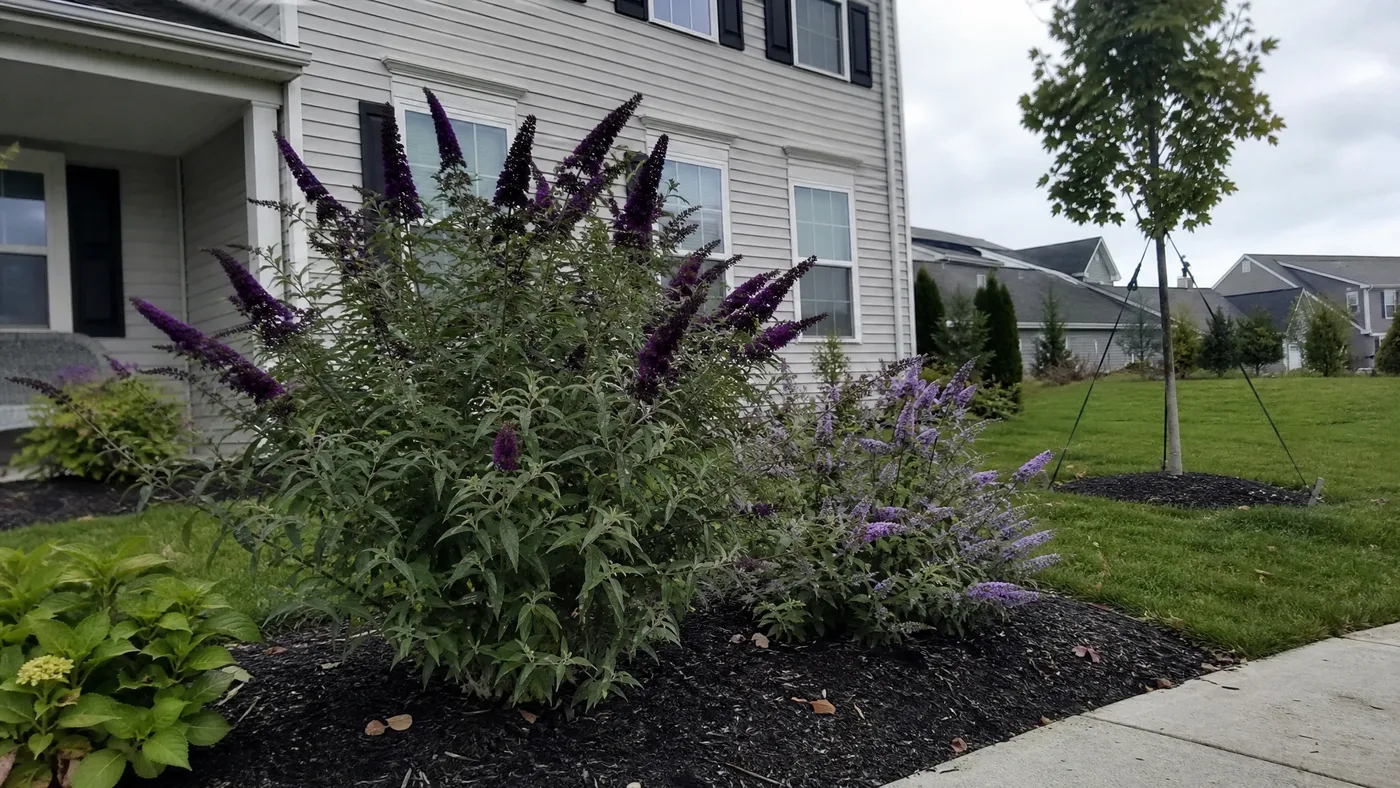
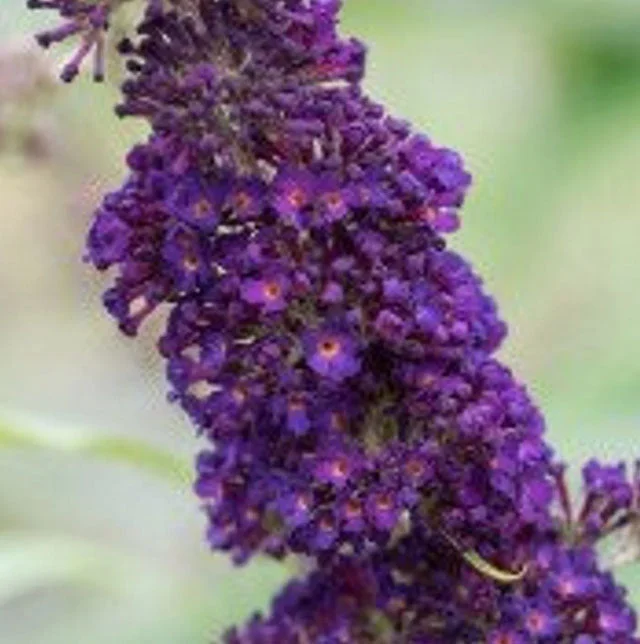
The species has lilac-colored flowers with an orange throat. Black Knight keeps the family build but has deep purple flowers. That is why one name describes a whole group and the other describes one specific plant.
The Traits We Compare
Every cultivar in this guide is a Buddleja davidii, so they share the basics: a fast-growing, deciduous shrub that flowers on current year's growth. What separates them is a short list of traits.
- Flower color and the shade of the eye or throat.
- Mature height and spread, which decide where the plant can live.
- Cold and soil tolerance, which decide whether it survives your site.
- Pruning and deadheading demands, which decide how much work it asks of you.
- Scent and the pull it has on visitors.
We give a verdict on each, always measured against Black Knight. If you want the direct head-to-head with one rival first, see our Black Knight and Dark Knight comparison.
Flower Color Across Black Knight Butterfly Bush and Its Cousins
Color is the first thing most people judge, and it is where the cultivars differ most. The table sets out what we can say for each, using the sources we trust.
| Cultivar | Flower color |
|---|---|
| Black Knight | Deep purple, scented, in elongated panicles |
| Nanho Blue | Light blue, in slender cylindrical panicles |
| Empire Blue | Violet-blue, scented |
| White Profusion | White with a yellow eye, scented |
| Pink Delight | Pink tones, check the plant tag |
| Miss Molly | Warm tones, check the plant tag |
| Royal Red | Warm tones, check the plant tag |
The Blues and the White
Nanho Blue has light blue flowers in summer and autumn, so it reads as a soft, pale plant next to Black Knight's near-black purple. Empire Blue sits in between, with violet-blue spikes that are clearly cooler and brighter than Black Knight.
White Profusion is the opposite end of the range. It has scented white flowers with a yellow eye. Against a dark fence or evergreen hedge, it glows in a way purple cannot.
The Pinks and Reds
Pink Delight, Miss Molly and Royal Red cover the warm side of the range. We have no cultivar sheets for these three in our source list, so we will not put numbers or shade names on them. Read the plant tag, and ask the seller how the color looks in full bloom.
Verdict: Black Knight wins for depth. No other cultivar here gives you that dark, almost inky purple, and it makes a strong backdrop for paler flowers. For a bloom calendar, our bloom time and flower color guide goes further.
Mature Size and Where Each Cultivar Fits
Size is where buyers get caught, because a butterfly bush in a one-gallon pot gives no hint of its final scale. Here is what the sources say.
The Numbers
Black Knight reaches an ultimate height and spread of 2.5 to 4 meters, which is about 8 to 13 feet in both directions. That is a big shrub. The species itself runs 6 to 12 feet high and 4 to 15 feet wide, so Black Knight sits in the upper half of the family.
Nanho Blue is smaller at 1.5 to 2.5 meters, about 5 to 8 feet tall. White Profusion and Empire Blue are both large, vigorous shrubs.
Which Space Suits Which Plant
For a border where you want a tall, arching screen, Black Knight does the job well. It needs room, roughly 8 feet of clear ground on all sides if you want it to keep its natural shape. Our size guide for Black Knight covers spacing in detail.
For a small yard, a bed beside a path, or a spot under a window, Nanho Blue is the safer choice because its ceiling is lower. Black Knight can be kept smaller with hard pruning, but you will be cutting it back every year to do so.
Verdict: Black Knight suits large spaces and Nanho Blue suits small ones. If your bed is tight, do not plant Black Knight and hope to prune your way out of the problem.
Hardiness and Soil Needs Compared With Black Knight Butterfly Bush
Here the cultivars are closer than their looks suggest, because they share the same species toughness. The differences are narrow, and mostly a matter of checking your own site.
Cold Tolerance
The species is winter hardy in USDA zones 5 through 9. Because every cultivar here is a Buddleja davidii, that range is a fair starting point for the group. Individual cultivars can vary at the cold edge, so check the tag, and ask your local extension service if you garden in zone 5.
Soil and Sun
The species prefers full sun and moist, well-drained soil, and adapts to most soil types. Its neutral range is pH 6.0 to 8.0. Black Knight accepts acid, alkaline or neutral soil, and full sun with partial shade is also acceptable.
Once established, the species is very drought tolerant. What it dislikes is soil that stays wet, so drainage matters more than any pH number. Our soil and drainage guide explains how to test and fix a heavy bed.
Verdict: This is a tie. No cultivar on our list asks for special soil, and Black Knight's wide pH acceptance puts it among the easier ones. Choose on color and size, then make sure the drainage is right.
Upkeep Black Knight Butterfly Bush Asks Compared With Others
All the cultivars here bloom on the current year's growth, which makes pruning forgiving. The differences are in how much plant you have to cut and how much tidying you want to do in summer.
Pruning
The University of Arkansas Extension says you can be quite aggressive with your pruning in the spring, and that applies across the group. Nanho Blue should be pruned annually in early spring, cutting back to a low framework.
Black Knight follows the same rule, but it has more to cut because it is a vigorous shrub that can reach 13 feet. A hard spring cut keeps it in bounds and gives you strong new stems to carry the flowers. Our pruning guide walks through the cut step by step.
Deadheading and Pests
Removing spent flower spikes tidies the plant and encourages further flowering in all of them. That is a light task on a small cultivar and a long ladder job on a tall one. Black Knight's height makes deadheading more of a chore than it is on Nanho Blue.
Pest pressure is low. The species has no serious insect or disease problems, though spider mites are a risk in drought. One of the most common questions we get is whether dark-flowered cultivars are fussier, and in our rows they are not.
Verdict: Nanho Blue is the lower-effort plant, and Black Knight is the larger job. Neither is hard.
Honey Scent and Pollinator Pull Across the Group
This is the warmest part of the comparison, because scent and visitors are why most people plant a butterfly bush at all.
Scent
The species has a honey-like fragrance, and Black Knight, Empire Blue and White Profusion all have scented flowers. We have no scent description for Nanho Blue, so smell one in person if fragrance matters to you.
Put the plant where you walk past it, near a path or patio, and not at the back of the property. A scent you never pass is a scent you never notice.
Visitors and Season
Butterflies and bees come to butterfly bushes, and the bloom window is the main thing that differs. The species blooms from June to September, and depending on the cultivar it can keep going until late fall. Prompt deadheading helps keep a plant flowering through that stretch.
We do not have source figures that rank one cultivar above another for visitors, and we would not trust a claim that did. Our pollinator guide covers what to expect from Black Knight in particular.
Verdict: A tie on visitor appeal, with a slight edge to the cultivars with confirmed scent. Black Knight is among them.
Choosing Between Black Knight Butterfly Bush and the Rest
Now we can pull the verdicts together. Match the plant to your main need and the answer is usually clear.
- If you want the darkest flowers and a tall screen, choose Black Knight and give it 8 feet or more of space.
- If you have a small bed or a path edge, choose Nanho Blue for its lower height and pale blue flowers.
- If you want a cool, bright color against green, choose Empire Blue.
- If you want flowers that glow against dark foliage or a fence, choose White Profusion.
- If you want warm tones, look at Pink Delight, Miss Molly or Royal Red, and confirm the color and size on the tag.
Black Knight is not the right pick for every yard. It is the right pick for a large, sunny site where you want drama and are willing to cut it back each spring.
Four Tag Checks Before You Buy Black Knight
Here is the lesson in short form, the way we would put it on a whiteboard. Whatever butterfly bush you hold, read the tag for four things before you pay.
First, the full cultivar name, since the species name alone tells you almost nothing. Second, the flower color. Third, the mature height and spread, because Black Knight reaches 8 to 13 feet and some cousins stay far smaller. Fourth, the hardiness zone and pruning note. If those four match your site, you have a good plant.
Black Knight Butterfly Bush
Nursery-grown Black Knight Butterfly Bush in sizes from Quart Plant, shipped to your door.
From $49.49
Shop Now →Our growers watch Black Knight closely through the year, from the spring cutback to the first scented spikes and the last late flush. We are a small business with our own farms that grows and sells top-quality shrubs.