How Much Sun Does a Black Knight Butterfly Bush Need?
Black Knight Butterfly Bush thrives in full sun. This plant needs at least 6 to 8 hours of direct sunlight daily to produce its signature display of deep purple flowers with orange eyes. Without sufficient light, your Black Knight will still grow, but blooms become sparse and flowering may be delayed until midsummer or early fall.
Getting the light right is one of the simplest ways to ensure a vigorous, free-flowering shrub. Unlike many ornamental plants that tolerate part shade, Black Knight is specific about its sun needs. This guide walks you through assessing your garden's light, choosing the right planting spot, and managing sun exposure across seasons and climate zones.
Why Full Sun Matters for Black Knight Butterfly Bush
Black Knight Butterfly Bush blooms on new wood, meaning flowers form on stems that grew earlier that same season. The plant channels energy into rapid growth early in the year (roughly 3 to 5 feet of new growth annually) and switches to flowering once day length shortens in midsummer. Full sun accelerates both processes.
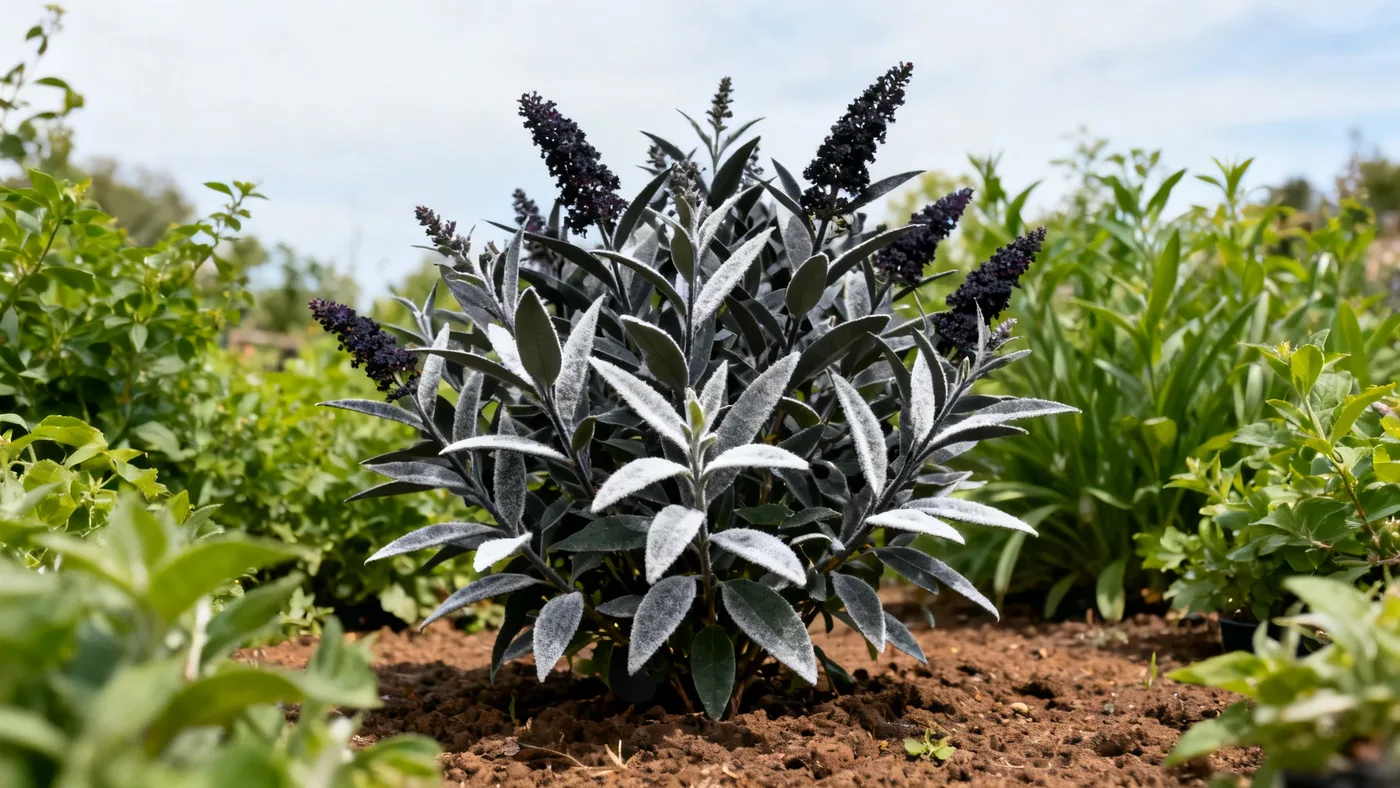
In strong light, the plant develops a dense, bushy form with flowers thickly packed along the panicles. In partial sun or shade, stems stretch, lower leaves drop, and flowering nodes are scattered along spindly growth. Additionally, the foliage itself responds to light: lance-shaped leaves in full sun develop a gray-green color with a silvery, felted underside that catches light beautifully.
Zones 5 through 9 all benefit equally from full sun exposure, though gardeners in cooler regions (zone 5 especially) may see earlier autumn frost cut the bloom season short regardless of light levels. The more sun you provide, the more time the plant has to flower before temperatures drop below freezing in late September or October.
Materials and Tools You'll Need
Assessing sun exposure requires minimal equipment. Here is what you'll find useful:
- A notepad or smartphone to log observations
- A watch or phone timer for tracking hours
- A basic light meter (optional, but helpful for comparing two candidate locations)
- A sketch or photo of your garden layout
- Knowledge of nearby trees and structures that cast shade
- Information about your USDA hardiness zone (5 through 9)
If you plan to modify light exposure, you may also want to gather pruning shears for removing low-hanging tree branches, or shade cloth if you live in zone 9 during extremely hot summers (though this is rarely necessary for Black Knight).
Step-by-Step: Assessing Your Garden's Sun Exposure
Step 1: Observe Shadow Patterns Throughout One Full Day
Choose a clear, cloudless day in late spring or early summer, when the sun's angle matches the growing season. Starting at sunrise, note which areas of your garden receive direct sun and which fall in shade. Repeat your observations every 2 hours until sunset.
Pay close attention to shade cast by trees, fences, buildings, and shrubs. Morning sun is typically cooler and gentler than midday rays. Afternoon sun, especially from 2 to 5 p.m., is more intense. Black Knight tolerates and actually prefers afternoon sun in most climate zones, so a spot that receives 6 to 8 hours of direct light including afternoon hours is ideal.
Step 2: Count Total Direct Sun Hours Over One Week
Tally the hours of direct, unfiltered sunlight each potential planting location receives. Count only periods when the sun is completely unobstructed by clouds, tree canopy, or structures. Partial sun (dappled light filtering through tree leaves) counts as roughly half an hour of equivalent direct sun for each hour of observation.
Your target is 6 to 8 hours of direct sun per day during the growing season. If you're comparing two locations and one receives 8 hours while the other receives 6, the 8-hour spot is almost always the better choice. The plant will flower more profusely and maintain a tighter, neater habit with denser foliage.
Step 3: Identify Microclimates in Your Yard
Gardens rarely have uniform light. A spot near a south-facing wall absorbs reflected heat and stays brighter and warmer. The north side of a building is shadier and cooler. Low-lying areas collect cold air in spring and fall, affecting bloom timing even if light is adequate. An east-facing location gets morning sun but afternoon shade. West-facing spots receive full afternoon sun with morning shade.
If you have multiple spots that meet the 6- to 8-hour minimum, choose the one that also offers good air circulation (to prevent powdery mildew and botrytis) and well-drained soil. These secondary factors prevent root rot and disease, which can compromise even a well-lit plant.
Step 4: Account for Seasonal Shade Changes
Deciduous trees provide full sun in early spring and late fall, but cast dense shade during midsummer. If you're planting under or near a deciduous tree, count sun hours specifically during June and July, when your Black Knight blooms most heavily. Winter dormancy means winter shade doesn't matter, but summer shade directly affects the number and quality of flowers.
Evergreen trees and buildings cast consistent shade year-round. These are generally poor neighbors for Black Knight unless the plant receives its 6 hours of direct sun before the shade takes over each afternoon.
Step 5: Account for Your Climate Zone
Gardeners in zones 5 and 6 (northern regions) benefit from every hour of sun, since the growing season is shorter and frost arrives by late September or early October. Black Knight blooms from roughly June through September in these zones, so maximizing light early in the season helps the plant flower before dormancy arrives. In zone 5 especially, the plant may die back to the ground over winter and regrow as a herbaceous shrub the following spring.
In zones 8 and 9 (warmer regions), the growing season is longer. Black Knight often flowers into October and November. Full sun is still the standard, but afternoon shade during the hottest weeks of late June through August rarely hurts and may reduce stress on newly planted specimens. Established, drought-tolerant plants handle heat well with 6 to 8 hours of direct sun.
Understanding Light Conditions and Expected Results
Once you've identified a location with 6 to 8 hours of direct daily sun, here is what you can typically expect over the first growing season and beyond.
Full Sun Planting (6 to 8+ Hours Daily)
Black Knight planted in genuine full sun typically produces a dense, rounded shrub 6 to 10 feet tall and 4 to 8 feet wide at maturity. New growth extends 3 to 5 feet per year, especially if the plant is cut back hard each spring (to 12 to 18 inches from the ground), which encourages vigorous regrowth from the base. Flower panicles are thick and numerous, opening from June through September in cooler zones and extending into November in warmer regions. The deep purple-black flowers with orange centers attract butterflies, bees, and hummingbirds reliably throughout the season.
Partial Sun (4 to 6 Hours Daily)
Plants receiving 4 to 6 hours of sun often still produce flowers, but blooms are fewer and may not emerge until midsummer. Stems stretch and become leggy, especially toward the base where older growth thins. If partial sun is your only option, aggressive pruning each spring helps rejuvenate the plant and reduces the spindly appearance. However, expect fewer flowers and a less compact form than you would see in full sun.
Insufficient Sun (Under 4 Hours Daily)
Black Knight planted in heavy shade (less than 4 hours of direct sun) may fail to flower altogether or produce only scattered blooms very late in the season. Growth is weak, foliage is thin, and the plant rarely reaches its full potential size. In this situation, Black Knight is not the right plant for that location. Consider relocating it or choosing a more shade-tolerant shrub instead.
Tips for Success and Common Mistakes to Avoid
Tip: Watch for Summer Shade Creep
As nearby trees mature and branches lower over the years, shade on your Black Knight increases year by year. If your plant suddenly blooms less abundantly than it did in previous summers, check whether nearby growth has blocked the sun. Removing a few low-hanging branches or thinning a tree's canopy can restore full sun access and revive flowering.
Tip: Use Reflective Surfaces to Boost Light
Light-colored walls, fences, or mulch reflect sunlight and can boost the effective light hours reaching your plant. If your spot gets 5 to 6 hours of sun but needs an extra boost, a pale fence or painted wall behind the shrub helps amplify available light.
Tip: Prune Strategically to Maximize Light Capture
See our guide on when and how to prune a Black Knight Butterfly Bush for detailed pruning timing and methods. Cutting back hard each spring ensures that new growth forms low on the plant where it can capture more light, rather than producing tall, spindly stems that shade their own lower foliage.
Mistake: Assuming Afternoon Shade is Beneficial
In most climates, Black Knight thrives with afternoon sun, not despite it. Afternoon shade is rarely necessary unless you're in zone 9 during a genuine heat wave. Even then, established plants are drought-tolerant and handle the heat well if soil is well-draining and not waterlogged.
Mistake: Planting Too Close to Large Trees
The root systems of mature trees compete fiercely for water and nutrients, and their canopies eventually shade your Black Knight. Plant at least 8 to 10 feet away from major trees to avoid competition and increasing summer shade as the tree grows.
Mistake: Confusing Dappled Shade with Adequate Sun
Light filtering through tree leaves looks bright to the human eye but counts as less than half the direct sun value. If you're tempted to plant in dappled shade under a large tree, be rigorous about whether the location truly receives 6 hours of direct, unobstructed light each day. When in doubt, choose the sunnier spot.
For more detailed growing strategies, including soil, water, and pruning techniques, see our complete Black Knight Butterfly Bush care guide.
Quick Reference: Black Knight Butterfly Bush Sun Requirements
| Light Condition | Sun Hours Daily | Expected Performance | Best for Zones |
|---|---|---|---|
| Full Sun (Recommended) | 6 to 8+ hours | Dense growth, abundant blooms June to September (or later in zone 9), compact form 6-10 ft tall and 4-8 ft wide, vigorous 3-5 ft annual growth | 5, 6, 7, 8, 9 |
| Partial Sun | 4 to 6 hours | Fewer blooms, delayed flowering until midsummer, leggy stems and sparse lower foliage without aggressive pruning | 7, 8, 9 (acceptable with extra care) |
| Shade | Under 4 hours | Minimal or no flowers, weak growth, plant may not reach mature size | Not recommended in any zone |
| Zone 9 Summer Heat | 6 to 8 hours with afternoon shade optional | Healthy blooming with possible heat stress relief on newly planted specimens | 9 |
Checklist Before Planting Your Black Knight Butterfly Bush
- Confirm your planting location receives at least 6 to 8 hours of direct sun daily during the June-through-September growing season
- Count summer sun hours specifically, since that is when your plant needs the light most
- Verify the location is at least 8 to 10 feet away from large trees that may eventually shade it
- Check that nearby structures will not cast increasing shade as seasons change or trees mature
- Ensure the soil is well-draining and not waterlogged (sun alone will not compensate for poor drainage)
- Plan to cut back the plant hard each spring to 12 to 18 inches from the ground to maintain compact growth and encourage flowering on new wood
- Monitor your plant's sun exposure over the first year, noting any seasonal or long-term shade creep from nearby growth