Black Knight Butterfly Bush Root System: Depth and Spread
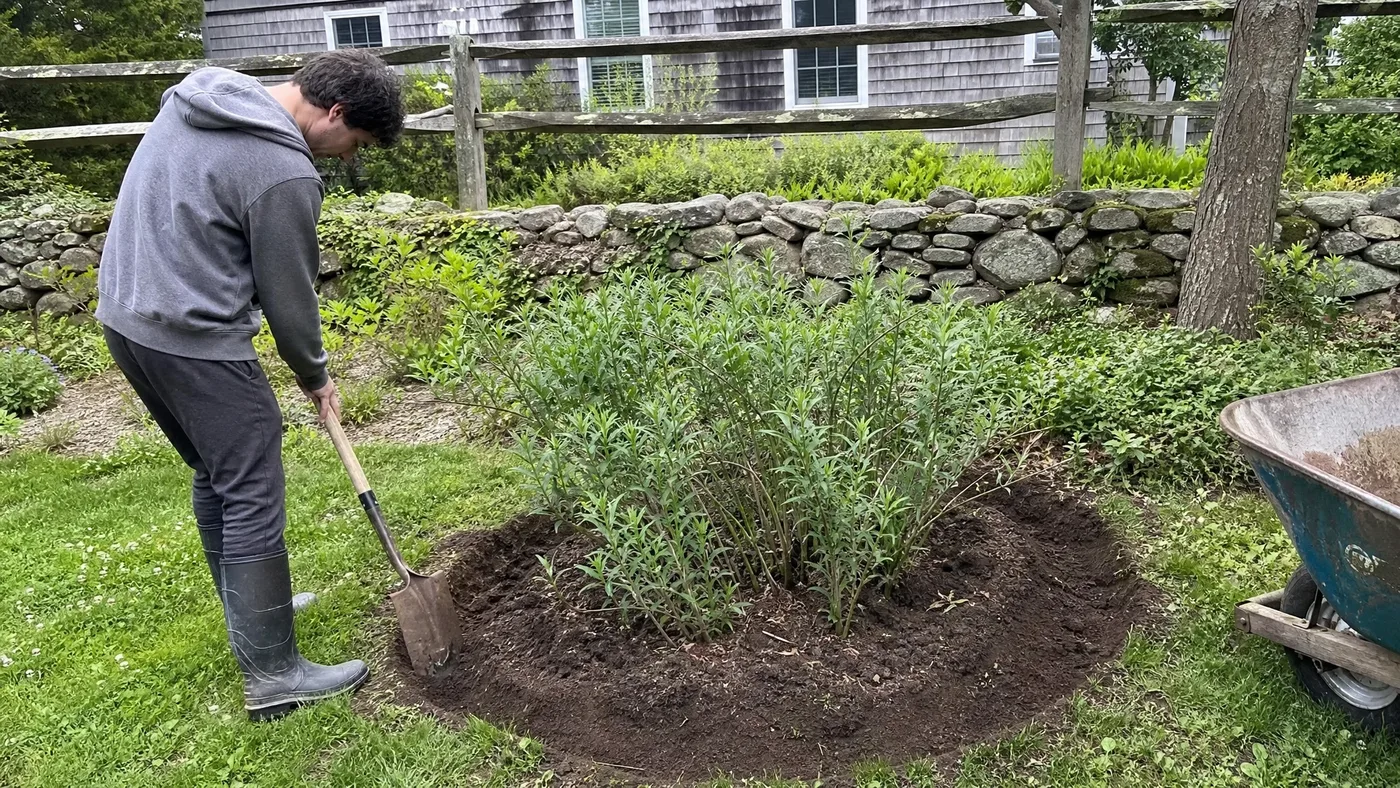
This season we pulled an old Black Knight out of one of our rows, and the spade told the story before we saw it. Barely a hand's width down, it hit a tight mat of fine, pale roots. We had braced for a deep, woody anchor. There was very little underneath, just a dense web running sideways.
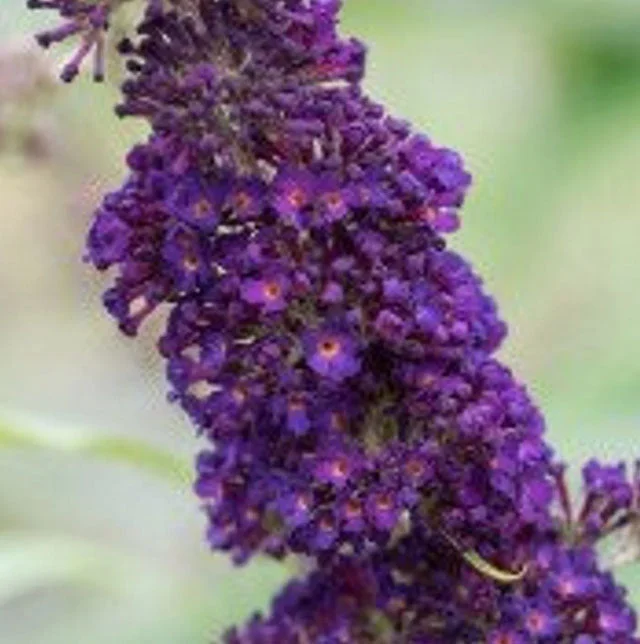
That surprise is why roots deserve their own look on this plant. A shallow web is easy to damage with a careless spade, and it dries out faster than the 8–13 foot shrub above it suggests. Looked after properly, it feeds the scented, deep purple panicles that open from June to September.
Below, you'll find out all about the Black Knight root system, including how deep and wide it runs, how close to plant it to pipes and paving, how to work around it, and how to move or remove it cleanly.
Fibrous Roots Beneath a Black Knight Butterfly Bush
Before you plan anything around the plant, picture what sits under it. The structure is simple, and it explains almost every habit in the sections that follow.
What the Roots Look Like
Dig back the soil beside a mature plant and you will find fine, pale, thread-like roots packed into a mat, all branching off a woody crown at the base of the stems. You will not find a thick taproot driving straight down. Most of the feeding happens in the top layer of soil, which is also where air, water and fertilizer arrive first.
Why a Shallow Mat Still Carries a Big Shrub
This is a fast plant. The species grows as a rapidly growing shrub, and Black Knight blooms on the current year's growth, so every spring it rebuilds a full set of stems and flower spikes from scratch. A wide, fine root mat suits that job well. It soaks up moisture quickly after rain and pushes out new feeder roots as the top grows.
The trade-off is anchorage. Tall, arching stems on a shallow base can rock in wind, especially in the first season after planting. After a storm, press the soil firm around the crown with your foot and tamp down any gaps.
Give the mat time, too. Black Knight takes 5–10 years to reach its full height, and the root system keeps widening along with it. A young plant has a small web. An old one has a broad, tangled disc.
How Far Black Knight Roots Reach Past the Canopy
Spread matters more than depth for this shrub. Work out where the roots end and you know where it is safe to dig, plant and pave.
Use the Canopy as Your Map
The cultivar has an ultimate spread of 2.5–4 meters, or about 8–13 feet. No source we use puts a precise number on the roots, so use a working rule: the roots reach at least as far as the branch tips and usually a little beyond. Treat everything under the canopy, plus a margin outside it, as root zone. Our guide on how big a Black Knight gets covers the top growth in more detail.
Hard Pruning Does Not Shrink the Roots
Here is a detail people miss. You can cut Black Knight back hard each spring, and extension sources say renewal pruning is fine. The stems drop to a stub, but the roots stay full size. A pruned plant in March has a small top sitting on a large root system, so do not assume the root zone shrank with it. Measure from what the plant will be by late summer, not from what you see in early spring.
Roots Do Not Run Like Suckers
The wide mat does not mean the plant creeps underground. The species self-seeds and naturalizes easily, so new plants come from seed, not from runners. Seedlings around the base are the thing to watch for, not roots tunneling through the lawn.
Why a Shallow Root Mat Dries Out Fast
A mat that sits near the surface loses water the way a thin sponge does. This section turns that fact into watering and mulching habits.
Water Wide, Not Deep
Established plants are very drought tolerant, according to the University of Arkansas Extension, and that is true. But the mat is the first part to feel a dry spell, and a long drought leaves the top growth stressed. Spider mites can become a problem during drought, so stippled, dusty-looking leaves are your cue to water.
Follow these steps in dry weather:
- Run a hose slowly at the drip line, not against the stem.
- Move it around the plant so the whole mat gets wet, including the margin outside the canopy.
- Let the surface dry before you water again, so the crown never sits in a puddle.
Newly planted shrubs are different. The roots have not spread yet, so water close to the stem at first and widen the circle as the plant grows. Our watering guide has the full routine.
Mulch the Whole Mat
Mulch is the cheapest insurance for a shallow root system. Spread an even layer over the full root zone, not a small ring at the trunk, and pull it back from the stems so the crown stays dry. This cultivar prefers moist but well-drained soil, and a mulched mat sits in that range longer between waterings. If your ground is heavy or sandy, our soil and drainage guide explains how to adjust it.
Planting Black Knight Butterfly Bush Away From Pipes
Because the roots spread wide and shallow, the planting spot matters more than anything you do later. Set it right and you will never need to think about utilities again.
Start With Locating Your Lines
Before you dig the hole, call your local utility locating service and have buried lines marked. Do it even if you think you know where the water line runs. Also check your local extension office or building department for any setback rules on septic systems and drain fields, since those vary by area.
Setbacks We Suggest
No source gives an official distance, so we work from the plant's own size. Place the center of the stem at least half the mature spread from the thing you want to protect. With an 8–13 foot spread, that is about 4–6 feet. The table below applies that rule.
| Feature | Where to plant | Why |
|---|---|---|
| Water, sewer and gas lines | At least 4–6 feet from the stem center, more if you can | Roots follow moisture and loose backfill, and you may need to dig the line up one day |
| Septic tank and drain field | Off the field entirely, and ask your local authority | Fine roots seek out wet trenches |
| House foundation | 4–6 feet out, which also leaves room for the canopy | Keeps the arching stems off walls and eaves |
| Paths and patios | Far enough that the spread clears the edge | Keeps blooms off the walkway and roots away from loose edging |
When you are ready to plant, our guide to planting a Black Knight the right way walks through the hole and the root ball.
Will Black Knight Butterfly Bush Roots Lift Paths, Patios or Foundations?
Customers usually ask us this before they buy, and the answer is reassuring. Here is how it breaks down by structure.
Foundations and Slabs
The roots are fine and fibrous, not thick and woody like those of a large tree. We have no source that links this shrub to foundation damage, and the structure of the roots argues against it. Slabs and footings are not at much risk from a mat of thread-like roots. The bigger risk is simple crowding, with an 8–13 foot plant pressed against a wall.
Drains and Old Pipes
Any shrub's roots will find a leak. A cracked clay drain or a loose joint leaks moisture, and fine roots will slip in through the gap. The roots did not cause the crack, but they will make it worse. If you have old buried drainage, plant well away from it, or repair the joint first.
Gravel, Pavers and Patios
Fine roots can work into the sand bed under loose pavers. Leave a gap between the plant and any dry-laid paving, and keep bark mulch off the paved edge so roots are not drawn that way. On poured concrete the worry is minimal, since there is no soil layer for roots to occupy.
Digging Around Black Knight Butterfly Bush Without Harm
The same shallow mat that spares your foundation is easy to wreck with a shovel. These habits keep the damage small.
Edge Beyond the Drip Line
Cut bed edges at or past the edge of the canopy, using a sharp spade and a single clean slice. Losing a few outer roots hurts far less than losing the thick network near the crown. Do not edge close to the stem, and never run a rotary tiller anywhere under the branches.
Add Plants Without Tearing the Mat
If you want companions beneath the arching stems, dig small holes with a hand trowel and lift roots aside rather than chopping them. Choose plants that tolerate dry shade from a big shrub. Stay clear of the inner circle, and leave the crown alone. Work in cooler, damp weather rather than in the heat of bloom season, when the mat is already working hard.
Cultivate With a Light Hand
Skip digging and forking. Pull weeds by hand and top up the mulch instead. If you need to loosen compacted soil, do it across the open ground outside the canopy, not under it. A deep dig anywhere in the root zone cuts the fine feeder roots that the whole plant relies on.
Moving or Removing a Black Knight Butterfly Bush
Sooner or later a plant ends up in the wrong place. The shallow root mat makes this easier than you might expect, if you plan for a wide, flat dig.
Digging It Up to Move It
Work while the plant is dormant, which in cold zones means early spring before buds break. Our pruning guide covers the cut-back first. Then follow these steps:
- Cut the stems back hard, which makes the plant manageable and cuts the demand on the roots.
- Mark a circle just inside the drip line, then slice straight down around it.
- Undercut from the sides, working shallow, and expect a broad, flat disc of roots rather than a deep ball.
- Slide a tarp under the root mass and drag or carry it to the new hole.
- Plant at the same depth as before, firm the soil and water the whole root zone.
The mass will be wide and fairly shallow, but it is heavy with soil, so get a second person to help.
Removing It for Good
Do not just cut it down. Even cut stems can re-sprout, so lift out the crown and as much of the mat as you can. Remove any seedlings nearby, and bag seed heads if you are clearing a big plant. If a healthy plant dies for no clear reason, remember that honey fungus is among the diseases it may be susceptible to, so check with your local extension service before replanting that spot.
Giving Black Knight Room to Work
The roots are modest, so give the shrub room above ground and a few feet of clearance below, then get on with planting. Keep the mat watered and mulched, dig around it gently, and it will repay you with scented purple spikes for months.
Black Knight Butterfly Bush
Nursery-grown Black Knight Butterfly Bush in sizes from Quart Plant, shipped to your door.
From $49.49
Shop Now →Before a plant leaves us, our growers tip it out of its pot and check for white, fibrous roots all through the root ball and a sound crown. We are a small business, and as growers with our own farms who grow and sell top-quality plants, we only send out the Black Knights we would be happy to plant in our own beds.