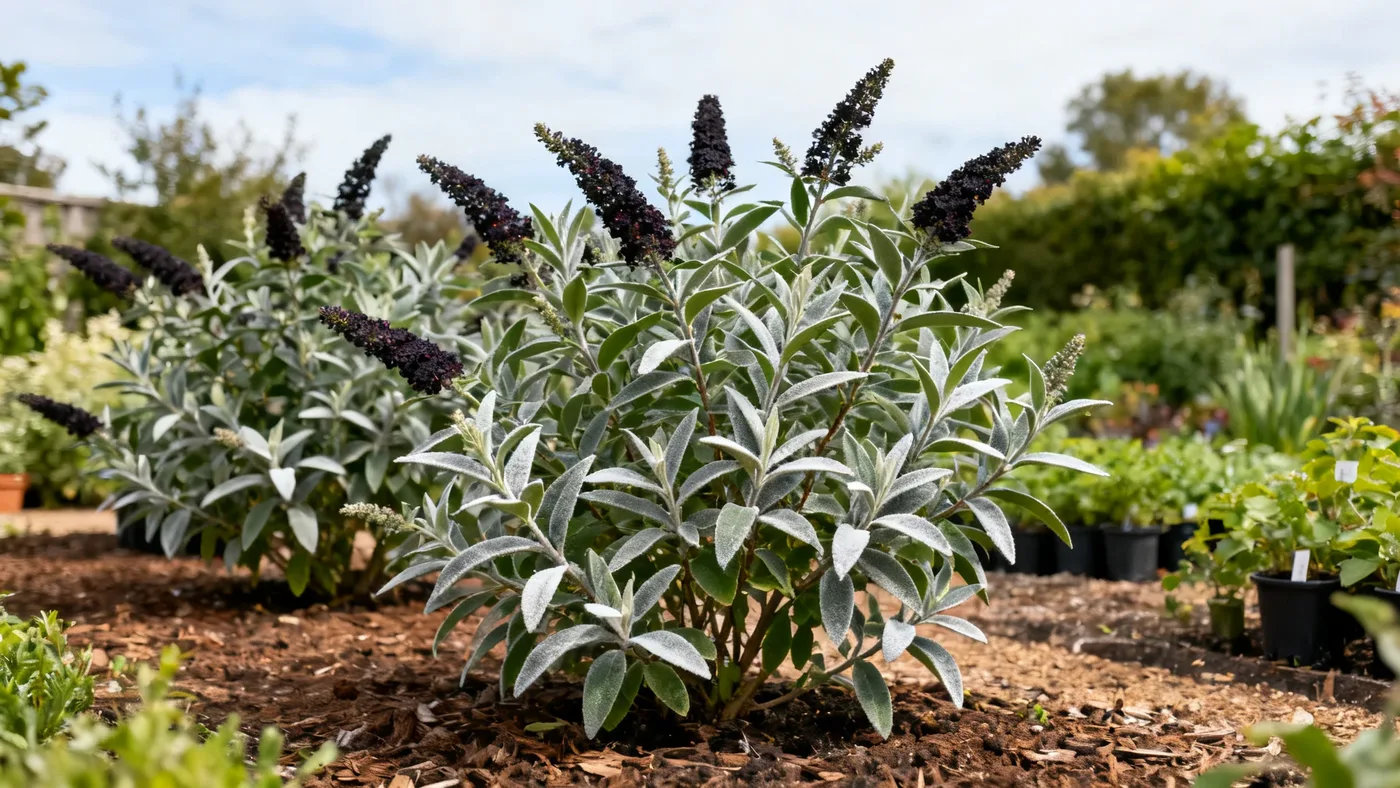
Watering Black Knight Butterfly Bush: A Complete Guide
Black Knight Butterfly Bush (Buddleja davidii 'Black Knight') rewards gardeners with deep purple flowers and prolific blooms throughout summer, but only if watering is matched to the plant's actual needs. Most gardeners either underwater and stress their plant or overwater and trigger root rot. The key is understanding that your butterfly bush has two distinct phases: establishment and full maturity. Each phase demands different watering strategy.
Materials You'll Need
- Soaker hose or drip irrigation line (recommended for consistent, deep watering)
- Watering can or garden hose with adjustable nozzle
- Soil moisture meter (optional but helpful for learning your plant)
- 2 to 3 inches of mulch (shredded bark or similar organic material)
- Timer for automated watering (useful for containers or forgetful gardeners)
The Establishment Phase: First Growing Season
Newly planted Black Knight Butterfly Bush requires moderate water to establish its root system. This phase typically spans the first growing season, whether you plant in spring after the last frost or in early fall to allow root establishment before winter.
Water your newly planted butterfly bush deeply 2 to 3 times per week during the first 4 to 6 weeks, assuming no rain. "Deeply" means watering slowly and thoroughly so moisture penetrates 8 to 12 inches into the soil. Shallow, frequent watering encourages weak, shallow roots that cannot access deeper soil moisture later.
Check soil moisture by inserting your finger 2 to 3 inches deep. If the soil feels moist at that depth, skip watering. If it feels dry, water deeply. Reduce watering frequency after 6 weeks to once or twice weekly, depending on temperature and rainfall. In cooler spring conditions, plants need less water than during hot, dry summer weather.
The Established Plant: High Drought Tolerance
Once Black Knight Butterfly Bush is fully rooted in, typically after its first full growing season, your butterfly bush watering needs shift dramatically. This plant has high drought tolerance. Established plants in zones 5 to 9 can survive weeks without supplemental water, provided they receive occasional rainfall.
For established plants in average conditions, water deeply once per week during the growing season. If summer rainfall exceeds 1 inch per week, skip your scheduled watering. During hot, dry spells with no rain, increase to twice weekly. In containers, watering needs are higher because pots dry out faster than in-ground soil.
The goal is to maintain soil that is moist but never waterlogged. Your butterfly bush absolutely dislikes constantly wet feet. Poorly drained soil and overwatering are the primary causes of root rot in this species, so err toward drier rather than wetter conditions.
Step-by-Step Watering Technique
- Water at soil level, not overhead. Aim your water directly at the base of the plant. Wet foliage, particularly in humid conditions, can encourage powdery mildew or gray mold on flowers. A soaker hose or drip line does this automatically.
- Water slowly and deeply. Let the hose run at a gentle pace for 10 to 20 minutes per plant, depending on soil type and pot size. Sandy soils drain quickly and may need longer watering or more frequent sessions. Clay soils hold moisture longer and need less frequent watering.
- Water in early morning. Early watering allows the foliage to dry quickly and reduces disease pressure. It also gives the plant water before the day's heat sets in.
- Check drainage immediately after planting. Dig your planting hole, fill it with water, and let it drain completely. If water is still present 4 hours later, your soil drainage is poor. Amend the hole with sand or compost, or choose a different site with faster drainage.
- Apply mulch after watering. Spread 2 to 3 inches of shredded bark or similar organic mulch around the base, keeping it 6 inches away from the stem. Mulch keeps soil cooler, slows evaporation, and gradually improves soil structure as it breaks down.
- Reduce watering in fall and winter. As temperatures cool and the plant prepares dormancy, cut back watering frequency. In zones 5 to 6, the plant typically dies back to the ground and behaves as a herbaceous shrub, so winter watering is minimal. In zones 7 to 9, where the plant remains woody above ground, water only during dry spells.
Seasonal Adjustments
Spring (after last frost through May): Moderate watering as new growth emerges. The plant needs water to support rapidly expanding foliage, but cooler temperatures slow evaporation. Water deeply once or twice weekly depending on rainfall and temperature.
Summer (June through August): Peak water demand. Your butterfly bush is blooming actively on new wood and growing 3 to 5 feet of new growth per year. This pace demands consistent moisture. Increase to twice-weekly deep watering during hot, dry spells. Do not let the plant wilt, as stress reduces bloom quality and flower production.
Fall (September through first frost): Gradually reduce watering as temperatures cool and day length shortens. The plant begins preparing for dormancy. Water weekly or as needed, reducing frequency toward the season's end.
Winter (after frost): In zones 5 to 6, watering is not typically needed once the plant is dormant and the ground is frozen. In zones 7 to 9, water occasionally during dry spells, but the plant's needs are minimal.
Container Growing and Watering
Black Knight Butterfly Bush can grow in a container for a season or two, though it performs better planted in the ground given its mature size of 6 to 10 feet tall and 4 to 8 feet wide. If growing in a container, use a large pot (at least 5 gallons, preferably larger) with drainage holes and quality potting soil.
Container plants dry out much faster than in-ground plants. Check soil moisture daily during the growing season. Water thoroughly until it drains from the bottom, then allow the top inch of soil to dry before watering again. In hot summer weather, container plants may need daily watering. Move containers to partial shade during extreme heat to reduce water loss.
Common Mistakes to Avoid
Overwatering and root rot: The most common error is watering too frequently. If leaves yellow, wilt despite wet soil, or drop prematurely, root rot is likely. Let the soil dry out between waterings. Check that your planting site or container has excellent drainage. Do not apply mulch directly against the stem, as this traps moisture and promotes rot.
Shallow, frequent watering: Light daily sprinkling encourages shallow roots that cannot access deeper moisture. Water less often but more deeply. Deep watering strengthens the root system and improves drought tolerance.
Ignoring rainfall: Many gardeners water on a fixed schedule regardless of how much rain has fallen. Adjust your watering based on actual soil moisture and recent rainfall. Overwatering during a wet week is a quick path to root problems.
Watering foliage: Wet leaves increase disease risk. Water only the soil. If you must use overhead watering, do it early in the morning so foliage dries quickly.
Assuming young plants need less water: Young, actively growing plants need reliable moisture to establish strong roots. Do not neglect watering during the first growing season.
Recognizing Watering Problems
Underwatering: Wilted leaves, crispy brown leaf edges, reduced flowering, and stunted growth signal too little water. The soil will be visibly dry. Water deeply and immediately. Most cases recover within a few days of proper watering.
Overwatering: Yellow leaves (especially lower leaves first), soft or mushy stems near the base, a foul soil smell, and wilting despite moist soil indicate root rot from overwatering. The soil stays soggy. Stop watering. Improve drainage by amending the soil or relocating the plant. Severely affected plants may not recover.
Link to Related Care
Watering is one piece of Black Knight Butterfly Bush care. For a complete picture of growing this plant successfully, see our complete care guide, which covers fertilizing, light, and soil requirements. Proper watering also pairs with smart pruning in late winter to keep your plant blooming vigorously year after year.
Quick Reference: Watering Checklist
| Growth Stage / Condition | Watering Frequency | Soil Moisture Target | Key Actions |
|---|---|---|---|
| First 4-6 weeks after planting | 2-3 times per week | Moist 8-12 inches deep | Water deeply; check finger-test at 2-3 inches |
| Established plant, growing season | Once to twice per week | Moist, not waterlogged | Skip if recent rainfall exceeds 1 inch; water at soil level |
| Hot or dry spells (summer) | Twice per week | Consistently moist | Do not allow wilting; apply 2-3 inch mulch |
| Container plants (any season) | Daily to every other day | Moist, drain from bottom | Check daily; larger pots dry more slowly |
| Fall and early winter | Weekly or as needed | Slightly drier | Reduce frequency as temperatures cool |
| Winter dormancy (zones 5-6) | Minimal or none | Dry | No supplemental watering once frost arrives |
| Winter dormancy (zones 7-9) | Occasional in dry spells | Slightly dry | Water only during extended drought |