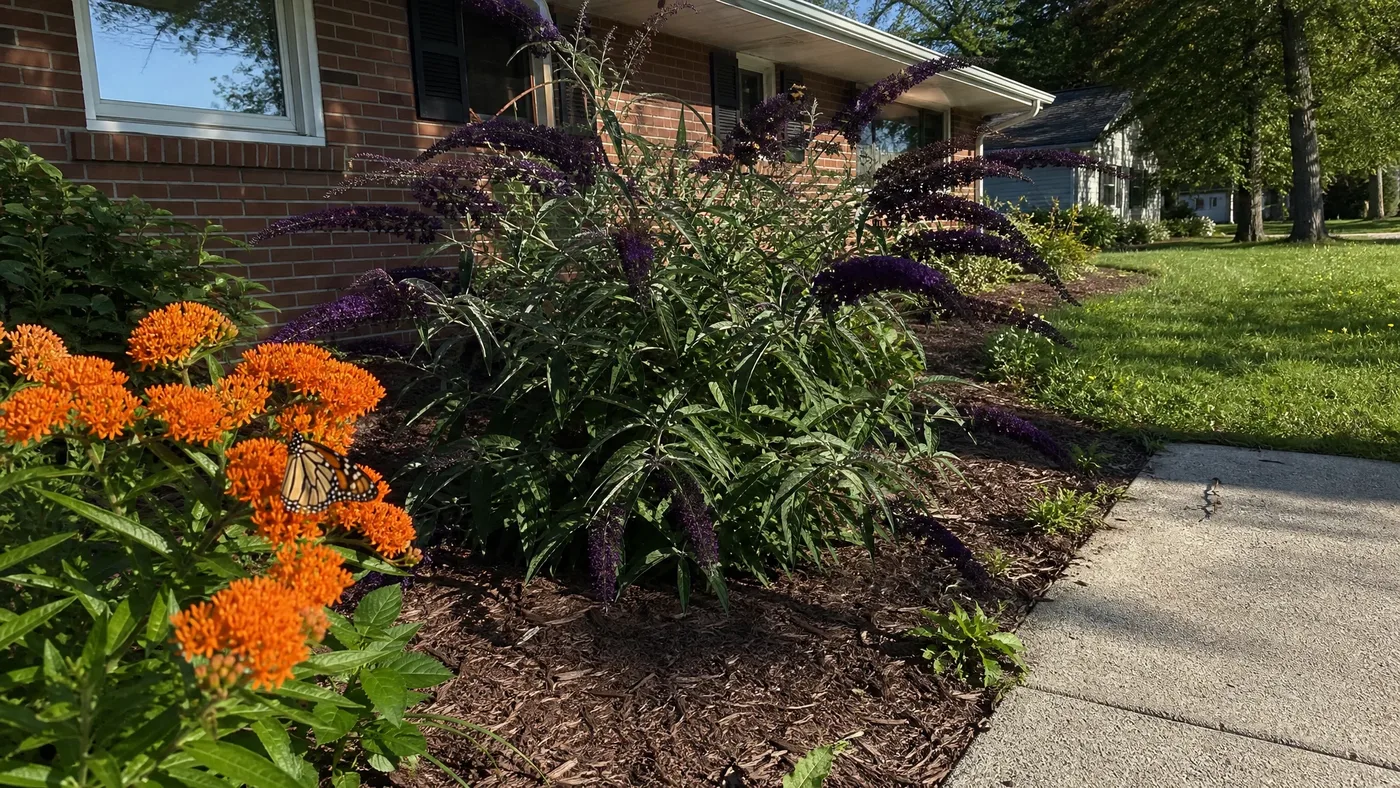
Black Knight Butterfly Bush vs Butterfly Weed: Not the Same
The tag said "butterfly," and the photo showed a monarch. We hear this story every season. A customer is holding a purple shrub in one hand and an orange perennial in the other, and they want to know who decided two unrelated plants could share a nickname.
The common belief is that "butterfly" on a label means the plant feeds monarchs the same way. What we see instead is two plants with different jobs that barely overlap. Get it wrong and you plant a nectar bar expecting a nursery. Get it right and you get a fragrant shrub and a true caterpillar plant.
We'll walk you through how each plant earned its name and what botany says separates them, then what monarchs need from each. After that we'll cover how to grow Black Knight, where butterfly weed fits beside it and which one we'd choose for you.
Where the Butterfly Name Came From
Both nicknames sound like a shared pedigree, but they are not. Here is how the overlap happened and why it keeps confusing shoppers.
We can't point to the person who first wrote either label. Common names grow by habit, not by committee. Both of these describe a visitor, not a relationship: butterflies land on the flowers, so the plant gets "butterfly" in its name.
That is where the logic ends. A shrub with fragrant purple spikes and a clumping orange perennial are named for the same behavior and nothing else. A garden center tag shortens both to "butterfly plant," and a search for one pulls up the other.
The word "weed" adds to the muddle. Searches like "butterfly bush vs weed" suggest people half expect one of these to be a nuisance. Butterfly weed is a native perennial, and nothing about it is weedy. The plant that carries the weedy reputation is the shrub. The butterfly bush species is sometimes weedy, which is why we tell customers to check local rules before planting.
The colors don't help sort them out either. Black Knight is deep purple, and butterfly weed runs bright orange to yellow-orange. Once you see the two side by side, the confusion is hard to keep up.
How Black Knight Butterfly Bush Got Its Reputation
Black Knight inherits a long record from its species, and some of that record is earned. We tested the claims one at a time.
The species, Buddleja davidii, became popular for toughness. NC State Extension says its resistance to deer, drought, heat, humidity and salt helped it grow in popularity. It also grows fast, which is why it fills a border in a couple of seasons.
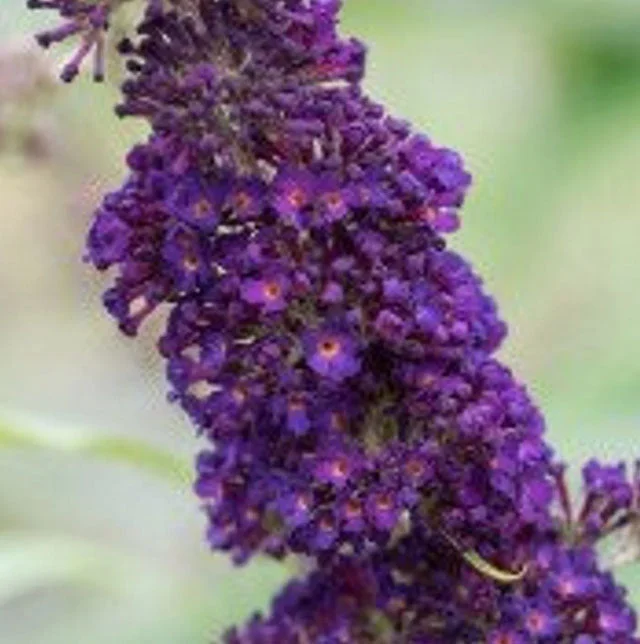
Black Knight adds its own look. The species is lilac with an orange throat, but the cultivar's flowers are deep purple, scented and held in elongated panicles at the tips of the current year's growth. The scent is honey-like, and on a warm afternoon you can smell it before you reach the plant.
The butterfly claim holds up as far as nectar goes. In our rows the panicles are rarely empty on a sunny day. Our guide to pollinators and Black Knight covers who shows up and when.
What the evidence does not show is breeding. A pollinator list tells you who drinks. It says nothing about who lays eggs, and that gap is where the tag goes wrong.
Buddleja and Asclepias Share Almost Nothing
Strip away the nickname and the two plants differ in almost every way you can measure. This table lays out the comparison.
| Trait | Black Knight Butterfly Bush | Butterfly Weed |
|---|---|---|
| Plant type | Woody, deciduous shrub | Tuberous-rooted herbaceous perennial |
| Mature size | About 8 to 13 feet high and wide | Clumps 1 to 3 feet tall |
| Family | Buddleja, not a milkweed | Dogbane family (Apocynaceae) |
| Flowers | Deep purple, scented panicles | Bright orange to yellow-orange clusters |
| Bloom window | June to September (species) | May to August |
| Sap | No milky sap to speak of | Clear sap |
Size is the first thing you'll notice in the garden. One plant is a shrub that can top 8 feet, and the other tops out at 3 feet and goes underground each winter.
The sap row surprises people. The classic milkweed trait is milky sap, but butterfly weed has clear sap, unlike many other milkweeds. So you can't use sap to tell them apart in the way a field guide might suggest. Use the plant habit and the flowers instead.
Scent splits them too. Black Knight smells of honey. Butterfly weed is grown for color, not fragrance.
What the Monarch Claims Actually Show
Here is the claim in question: a butterfly bush is a monarch plant. We weighed it against what the sources say about each role.
A butterfly has two needs from plants. Adults need nectar, and caterpillars need leaves. They are separate jobs, and plants rarely do both.
Butterfly weed does the caterpillar job. It is a larval host plant for monarch, gray hairstreak, queen and milkweed tussock moth caterpillars. Monarchs may have one to three broods in the north and four to six in the south, and every brood needs that host.
Black Knight does the nectar job. It's a fine feeding station, but it isn't a host. A monarch can sip from it all afternoon and still have nowhere on that shrub to lay eggs.
One of the most common questions we get is whether Black Knight alone will bring monarchs back to a yard. Our answer is that it will draw adults for a drink, and that is all. If you want caterpillars, you need a milkweed.
The reverse deserves honesty too. Caterpillars chew leaves, so a host plant looks ragged when it's doing its job. That is what success looks like, and you shouldn't spray it.
Growing Black Knight Butterfly Bush as a Shrub
With the background settled, here is how we'd grow Black Knight so it earns its place. The plan comes down to sun, soil, size and one spring cut.
Sun, Soil and Water
Give it light and drainage and it will mostly look after itself.
The species prefers full sun. We'd pick the sunniest spot you have, because the panicles form on new growth that needs light. See our guide on how much sun Black Knight needs.
Soil can be fairly forgiving. The species does well in a soil pH of 6.0 to 8.0. What it won't tolerate is a wet spot. Once established it is very drought tolerant, though spider mites can show up during drought.
Size and Spacing
Plan for the size on the label to be the low end of the truth.
The cultivar has an ultimate height and spread of 2.5 to 4 meters, about 8 to 13 feet. That's larger than many older tags claim. The species is listed at 6 to 12 feet high and 4 to 15 feet wide, so don't plan on a tidy 5-foot mound. Our guide on how big Black Knight gets goes further.
Cutback Timing
Because the flowers sit on the current year's growth, a hard spring cut costs you nothing.
The University of Arkansas Extension says you can be quite aggressive with spring renewal pruning. We cut in spring, as new growth starts, and let the plant rebuild. Details are in our guide to when and how to prune Black Knight.
Siting Butterfly Weed Beside Black Knight Butterfly Bush
Pairing the two makes sense, since you get the nectar bar and the nursery in one bed. The trick is giving each what it needs, because their habits could not be more different.
Give the Milkweed Room and Light
Start with where the shade falls.
A shrub of 8 to 13 feet casts real shade, and a perennial that stands 1 to 3 feet tall sits in it. Put the butterfly weed on the sunny side of the shrub, well out from its spread. Allow the full mature width for Black Knight before you decide where the milkweed goes. For more pairings, see our landscape ideas and companion plants.
Mark the Spot for Late Emergence
The two plants wake up on different schedules.
Butterfly weed is herbaceous and tuberous-rooted. It dies back in winter and comes up late in spring, well after the shrub has started to leaf out. Mark the spot with a stake so you don't dig or mulch over it. It also resents being moved once settled, so pick the place carefully the first time.
Handle the Sap Sensibly
One practical note on handling.
Butterfly weed is low in poison severity, and the sap can irritate skin and eyes. Wear gloves when you cut it and wash your hands afterward. Both plants are listed as deer resistant, so neither should draw browsing to the other.
Choosing Between Black Knight Butterfly Bush and Milkweed
Our verdict: pick by what you want the plant to do, not by the word on the tag.
Choose Black Knight for Scent and Structure
Black Knight is the right call if you want height, fragrance and long summer color.
It gives you a large shrub with honey-scented purple flowers and a bloom window the species runs from June to September. It also takes drought and heat in stride. If you are shopping, our buying guide shows what to look for. We grow and sell Black Knight, and we'd rather you buy it for the right reasons.
Choose Butterfly Weed for Caterpillars
Butterfly weed is the only one of the two that feeds monarch caterpillars.
If monarchs are your goal, it's the plant to buy first. It stays small, has a vivid orange display and suits a sunny border or meadow patch. Skip it only if you have no open sun.
Plant Both When You Can
For most yards, we'd plant both.
They don't compete for the same space or the same job. The milkweed hosts the caterpillars, and the shrub feeds the adults that come back. If you can fit only one, base the choice on whether you want a shrub or a caterpillar plant.
Black Knight and Butterfly Weed, Each in Its Place
"Butterfly" on a plant tag tells you who visits, not who breeds. Black Knight gives nectar, scent and size. Butterfly weed gives monarch caterpillars a host. Both plants earn a place once you know what each can and cannot do.
Black Knight Butterfly Bush
Nursery-grown Black Knight Butterfly Bush in sizes from Quart Plant, shipped to your door.
From $49.49
Shop Now →On our farms, we grow Black Knight in full sun and well-drained soil, and we cut it back hard in spring, which is the same routine we'd suggest for your garden.