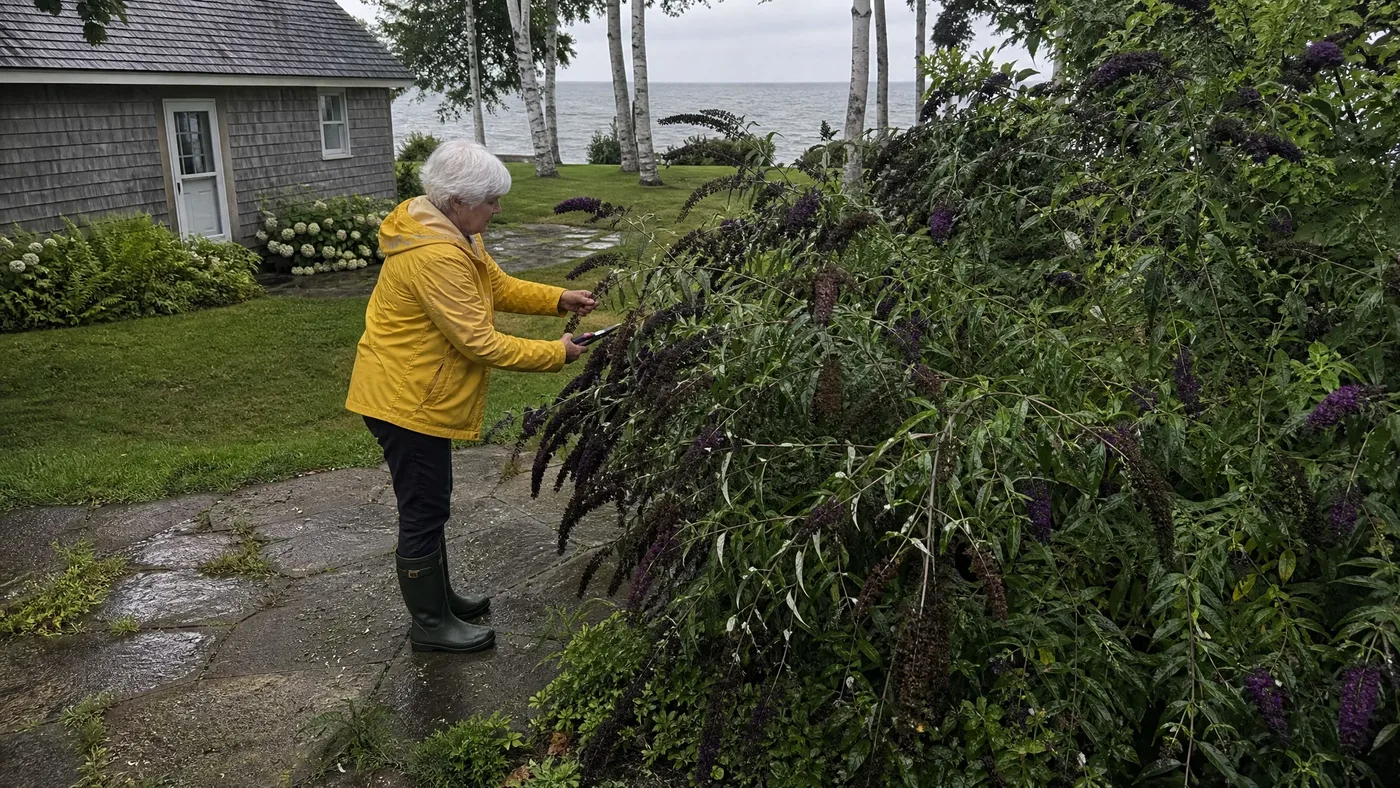
Do You Need to Deadhead Black Knight Butterfly Bush?
Picture a row of Black Knight in late July. Every shrub is loaded with deep purple spikes, and a few brown, spent ones are waiting to be cleared before the next batch of blooms goes out. Black Knight comes from Buddleja davidii, a fast-growing species that sets seed freely, and that heritage is why this chore matters. One of the most common questions we get is whether those brown tips need clearing at all.
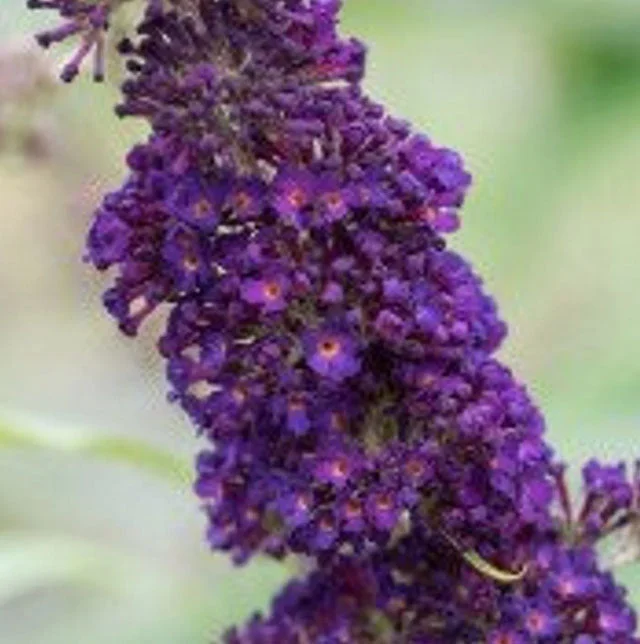
In this article, we'll go through whether to cut at all, how to read a spike and place the cut, and when to stop in fall. Done well, the job keeps honey-scented purple coming for weeks longer. Done badly, it costs you flowers or fills the neighborhood with seedlings.
Should You Cut Spent Spikes at All?
This is the first decision, and we make it before anyone picks up a pruner. The answer depends on what you want from the plant.
What Cutting Gets You
Black Knight carries its flowers on the tips of the current year's growth. Remove a spent panicle from a leafy stem and that stem tends to push side shoots, and the side shoots carry the next spikes. Leave the panicle and it ripens into seed, so the plant puts its energy there and the show thins out sooner.
You will hear that a butterfly bush stops blooming the moment you quit deadheading. It does not. It slows down and finishes earlier, which is a different thing. Our bloom time and flower color guide shows what a full season looks like.
When You Can Skip It
Some gardens do not need the extra weeks, and that is a fair choice.
If Black Knight sits at the back of a casual border and you are happy with a big first flush and scattered later spikes, the job is optional. Seed is the exception. Washington's noxious weed board tells growers to deadhead flower spikes before they produce seed, and it notes that one cultivar produces an estimated 40,000 seeds per flower head. That seed stays viable for 3 to 5 years.
Our call: deadhead if you want the longest bloom. Skip it only if no seedlings can wander off your property.
Reading a Black Knight Butterfly Bush Panicle Before You Cut
Cut too early and you remove buds that were about to open. Cut too late and you lose weeks. A few seconds of looking at each spike settles it.
A Black Knight panicle opens from the bottom up, so one spike is often half spent and half still in bud. Judge the whole spike, not just the base. This table sorts what you will meet into three stages.
| Stage | What you see | What to do |
|---|---|---|
| Still opening | Deep purple at the base, tight buds toward the tip, strong honey scent | Leave it |
| Mostly spent | Dull, faded flowers along most of the spike, a few buds left at the tip | Wait for the next pass |
| Fully faded | Brown, dry florets from base to tip, no scent, no buds | Cut it |
Use Your Nose and the Color
Two quick senses beat any measuring.
The honey scent leaves with the flowers, so a spike you cannot smell from a foot away is probably finished. Color helps too. The species is lilac with an orange throat, so its fading is gentle. On Black Knight the dark purple goes dull and brownish gray, which is easy to spot against fresh spikes.
Check Who Is Still Visiting
A spike that bees or butterflies are still working is not spent, whatever it looks like from across the yard.
Leave those for another few days. Our pollinator guide covers who comes and when. The rule here is simple: cut only fully faded spikes, and let the half-spent ones wait.
Choosing Between Fingers, Snips and Shears
The right tool depends on the stem under the spike and on how many spikes you have to clear. Pick it before you start the pass, not halfway down the row.
Fingers for Small Spikes
On a young plant, many spent spikes sit on soft, green stems that pinch off cleanly.
Black Knight takes 5 to 10 years to reach its ultimate size, so a newer shrub stays within easy reach. Pinch just above a leaf pair and you are done. Stop pinching when the stem starts to resist, because twisting leaves a ragged break.
Snips for Most Spikes
This is the tool we reach for first, and it handles nearly everything on a plant in its prime.
A small pair of sharp bypass snips makes a clean cut on semi-woody stems and costs a few dollars. We often see customers tear stems with their fingers and leave frayed bark that heals slowly. Wipe the blades with rubbing alcohol if you notice any diseased leaves between plants.
When Shears or Loppers Make Sense
Mature Black Knight can reach 8 to 13 feet in height and spread, so some spikes will be out of reach.
Long-handled loppers or a pole pruner clear the tall ones. Hedge shears are fine if you grow a row and want to take off spent tips in one sweep, but they are blunt about it and will clip buds you wanted. Our choice: snips for most, fingers for the small ones.
Where to Make the Cut on Black Knight Butterfly Bush
The cut point decides how fast the plant flowers again. Follow these steps on each fully faded spike.
- Follow the spike down to the first set of healthy, full-sized leaves. Black Knight's leaves are lance-shaped and whitish beneath, so the first good pair is easy to spot.
- Look at the joint where those leaves meet the stem. Tiny side buds or shoots here are your target.
- Cut just above that joint, on a slight slant, close enough that you leave no bare stub.
- Move to the next spike and let the cuttings drop under the plant or collect them on a tarp.
Why a Shallow Cut Wins
The reason is how the plant blooms.
The flowers are panicles at tips of current year's growth. A shallow cut leaves the leaves and side buds that will produce those tips, and new spikes follow soon. The plant also keeps its leaf area, so it keeps feeding itself.
What Goes Wrong With a Deep Cut
Cutting back several inches below the spike feels tidy, but it costs time.
The stem has to regrow leaves before it can bloom, which delays flowers by weeks and thins the plant's late show. Save the deep work for winter. In summer, stay shallow.
How Often to Walk the Row in Summer
A rhythm matters more than effort. Short, regular passes beat one big cleanup in August.
Start at Midsummer
The first flush opens before midsummer, and spikes from it are still fresh for a while.
The species blooms from June to September, but in our rows the first real stretch of brown shows up around midsummer. That is when the walk begins. Earlier passes mostly find spikes that are still opening.
Weekly or Every Two Weeks
Pick a pace that fits your week and keep it.
Weekly suits a hot stretch or a plant you walk past daily. Every two weeks is enough for a casual border. Each pass takes minutes: scan, sniff, snip the fully faded, move on. Pair it with a look at the leaves, since dry spells invite spider mites. Our care guide covers watering and feeding through the same weeks.
Plan the Route
Go in the same order every time so no shrub gets skipped.
Start on the sunniest side, where spikes fade first, then work to the shaded side. Do the tall plants in one go with loppers. Choice made: a quick weekly or every-two-week pass from midsummer.
Letting Seed Heads Stand on Black Knight Butterfly Bush in Fall
At some point the cutting stops. Early fall is when we put the snips away.
New growth encouraged late in the season has little time to harden before frost, and the last flush of spikes does more good left alone. Zones 5 through 9 are the species' range, and your own first frost date sets the real cutoff. Ask your local extension service when that falls.
The Case for Leaving the Last Flush
The final spikes turn into seed heads that give the plant winter interest.
Brown spikes and tawny seed heads look good with frost on them. Finches often pick at them in the cold months. Stop cutting and enjoy that.
When Seedlings Are a Concern
Leaving seed is a trade-off, and it depends on where you live.
Where this species spreads into wild areas, local weed boards may ask you to cut every spike. Check before you leave the seed heads. Our invasiveness guide explains how to find out. The choice: leave the last flush unless your local rules say otherwise.
Keeping This Job Apart From the Winter Cutback
Light summer trimming and hard winter pruning share a pair of snips and nothing else. Treat them as two jobs.
Two Jobs, Two Calendars
Summer deadheading takes off spent spike tips. It is shallow, frequent and aimed at bloom.
Winter cutback is a hard, once-a-year reduction of the whole plant. Extension guidance says you can be quite aggressive with your pruning in the spring, and we do it in late winter before new growth starts. Our pruning guide has the full method.
Do Not Mix Them Up
The common error is trying to do the winter job in fall, or the summer job with a deep cut.
A hard fall cut removes the seed heads and invites tender regrowth before frost. A deep summer cut delays bloom. Keep summer shallow and keep the big cut for late winter. That is the choice.
Black Knight Butterfly Bush Deadheading in One Routine
Snip faded spikes weekly until early fall, then leave the rest alone and save the hard cut for late winter. Read the spike first, cut only what is fully brown, make the cut shallow just above healthy leaves, and use snips for most of it.
Black Knight Butterfly Bush
Nursery-grown Black Knight Butterfly Bush in sizes from Quart Plant, shipped to your door.
From $49.49
Shop Now →As a small grower, we want the plants we raise and sell from our own farms, top-quality Black Knight among them, to bloom as long as they can in your yard, which is why we care about getting this small chore right.