Is Black Knight Butterfly Bush Invasive? What to Know First
Drive past a highway embankment in August and you may remember, as we do, a whole slope of self-sown butterfly bushes, lilac and purple spikes thick with bees and every butterfly for a mile. It looked like a gift, and it was really a warning. A single flower panicle on Buddleja davidii can carry as many as 40,000 seeds, and that number is why the question in this guide's title deserves a straight answer.
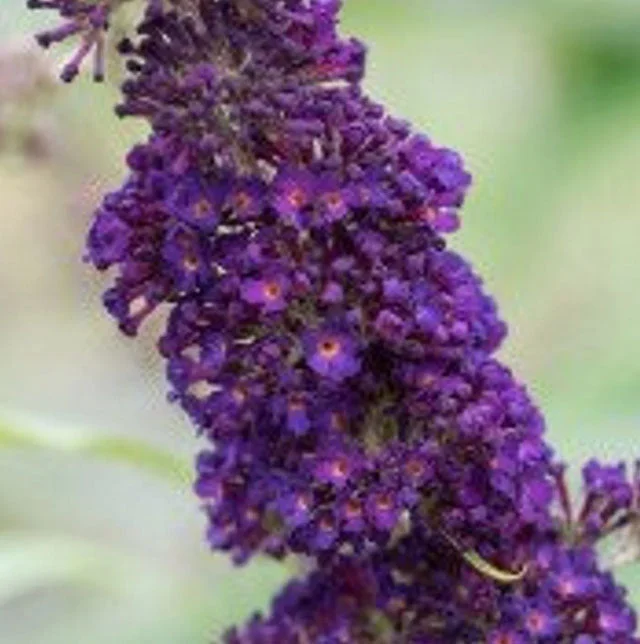
Black Knight is a Buddleja davidii cultivar, the deep purple one with the scented flowers, and what matters is what it does with its seed once it is in your yard. This guide covers everything you need to know about Black Knight and its seed, from the sterile-series myth and state rules to deadheading and native alternatives.
The Belief That Black Knight Butterfly Bush Is Sterile
Of all the things customers tell us about this shrub, the most common is that it must be one of the seedless kinds. It is not, and here is where the idea comes from.
Where the Sterile Label Comes From
The sterile butterfly bushes people have in mind are the trademarked low-seed series, the best known being Lo & Behold. That group is made up of compact shrubs that grow 2–3 feet tall and wide, and Oregon counts a shrub as sterile only when it produces 2% or less viable seed.
Those plants were bred and tested to meet that bar. A tag that says "sterile" or "seedless" is describing a specific series with a specific result, not butterfly bushes in general.
Why Black Knight Is Not Part of That Group
Black Knight is an older, full-size selection. It is a vigorous large deciduous shrub reaching 2.5–4 meters (about 8–13 feet) in both height and spread. Nothing in the sources we rely on lists it as sterile or low-seed, so we tell customers to treat it as a plant that sets seed.
The mix-up usually happens on the nursery bench, where compact sterile series and tall classic cultivars sit side by side with similar names and similar tags. Our buying guide shows what to check on the label, and we sell Black Knight under its own name so you always know which one you are taking home.
Size is the quickest tell. If the plant in your cart is meant to stay under 3 feet, it is not Black Knight, and if it is Black Knight, plan for a shrub as big as a small tree.
Does Every Butterfly Bush Spread the Same Way?
No, and the difference between the species and its cultivars is the heart of the matter. A reputation earned on a roadside slope does not transfer automatically to every plant sold under the same name.
What the Species Is Known For
Buddleja davidii is a rapidly growing, sometimes weedy shrub. It is labeled a noxious weed in Oregon and Washington, and the NC Invasive Plant Council lists it as invasive in the Mountain and Piedmont regions of North Carolina. The concern in natural areas is that it can outcompete native species, which ironically hurts the butterflies people plant it to attract.
Where Black Knight Stands
Cultivars differ in real ways. Black Knight has deep purple flowers, where the species is lilac with an orange throat, and Black Knight's height of up to 13 feet sits at or just above the top of the species' 6 to 12 foot height range, while the width falls inside the species' 4 to 15 foot range. It is a straight Buddleja davidii selection, and we know of no source showing it seeds less than the species does.
So its place on the risk map is the species' place. Being a named cultivar is not the same as being seedless, and we push back on the idea that a fancy name or a deep color makes a plant safe. The sterile cultivars are the exception, not the rule, and Black Knight is not among them.
If you want the practical side of that size, our guide to how big a Black Knight butterfly bush gets covers what to plan for.
What Black Knight Butterfly Bush Really Does With Its Seed
Here is the honest picture of how seed forms and moves, and what it changes in an ordinary yard.
How the Seed Is Made and Travels
Black Knight flowers on the tips of the current year's growth, in long deep purple panicles, and it keeps making new ones for weeks. The species blooms from June to September, and every spike that fades and dries is a seed head. A single panicle can carry as many as 40,000 seeds, and the seeds travel by wind or water.
That is why a plant in your front bed is not a closed system. Seed is light enough to leave your property without anyone noticing, and it lands wherever the air or a ditch takes it.
Why the Soil Seed Bank Matters
Seeds that do not germinate right away stay viable in the soil for three to five years. This is the part gardeners miss. You can remove a mature shrub, feel finished, and still be pulling seedlings several summers later.
It also means a single missed season is not forgotten. Seed shed in a bad year can sprout in a good one.
What This Means in a Garden
Placement is the biggest decision you control. A shrub in a mulched bed in town, surrounded by lawn and paving, has little open ground to seed into. The same shrub beside a stream, a woodland edge, a pasture fence or a gravel drive has a very different story, because bare, sunny, disturbed soil is exactly what the seedlings want and these are the places the seed reaches.
One of the most common questions we get is whether it is "safe" in a small yard. Our answer is that a small yard far from natural areas is the lowest-risk setting, and the risk grows with every wild edge nearby.
The Idea That a Legal Plant Is Always Safe
Because you can buy Black Knight in many places, plenty of people assume nothing restricts it. Availability and permission are different things, and the rules vary by state and even by region inside a state.
What the Sources Say About Restrictions
This table shows the rules we can point to from our sources, which cover the species and its cultivars, not a complete state-by-state list.
| Place | What the source says |
|---|---|
| Oregon and Washington | Buddleja davidii is labeled a noxious weed. |
| Oregon (2010) | Sale of unapproved Buddleja davidii selections was prohibited, while sterile cultivars were not affected. |
| North Carolina (Mountain and Piedmont) | Listed as invasive by the NC Invasive Plant Council. |
| Maryland | Rules on a prohibited species apply to all its cultivars unless one is individually exempted. |
Reading Those Rules for Your Own Yard
The Oregon line is the one to notice. Sterile cultivars were exempt, and an unapproved selection like a full-size seeder was not. Maryland works the other way around in principle, since the University of Maryland Extension explains that once a species is listed as prohibited, the regulations apply to all cultivars unless a cultivar is later granted an exemption.
So a "sterile" claim on a tag does not guarantee an exemption, and a cultivar name alone does not either. We cannot tell you the current status of Black Knight in your state, and rules change. Call your local extension service before you plant, and read the brief note in our deer resistance guide on states where it is not recommended.
Even where it is legal and unlisted, a plant that spreads into a neighbor's field or a nearby creek bank is still your responsibility, whatever the law says.
Why Cutting Spent Blooms Matters for Black Knight Butterfly Bush
The usual advice is to deadhead and call it done. Deadheading is the right habit, but it does less than people hope, and it is worth being clear about how much.
What Deadheading Does
Every panicle you cut before it dries is a panicle that cannot drop seed. Because Black Knight blooms on current-year wood, cutting spent spikes also pushes the plant to make more flowers, so you get a longer show and less seed together. Our pruning guide covers cutting back for shape and bloom.
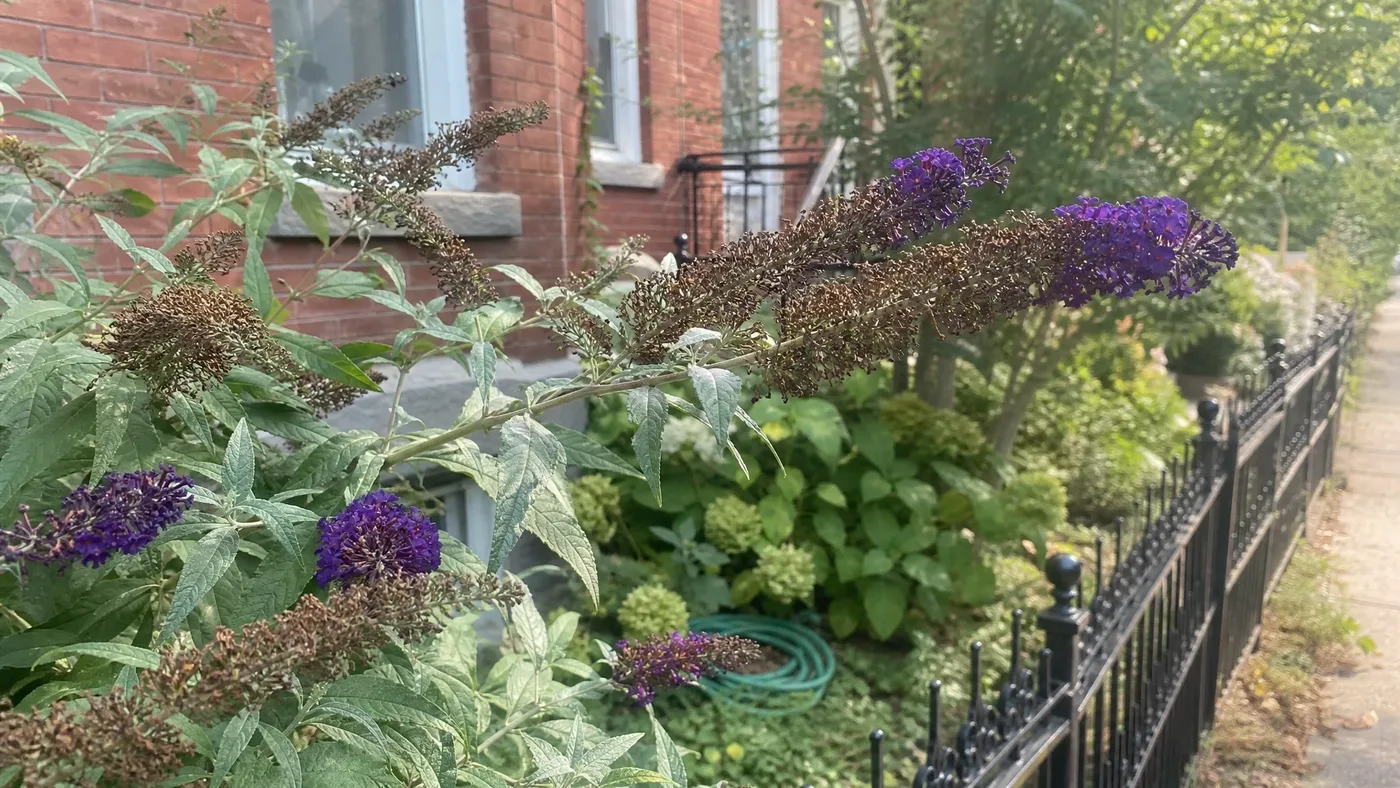
In our rows, the panicles we miss in August are the ones that turn brown and rattle by October. That rattling is seed on its way out.
What Deadheading Cannot Do
A mature Black Knight can be 8–13 feet tall, and the top spikes are hard to reach. The long bloom season from June to September means the job has to be repeated, not done once. Panicles also open over weeks, so a spike that looks half in flower may already hold ripening seed at its base.
No source we use puts a number on how much seed deadheading prevents, so we will not claim one. What we tell customers is that it limits seeding substantially if you do it steadily and reach the high spikes, and not at all for the ones you skip.
A Routine That Works Better
Combine the cutting with a hard spring renewal prune, which University of Arkansas extension says you can do quite aggressively, and keep the cut spikes out of the garden's edge. Check beneath and around the shrub for seedlings every year, and keep checking for three to five years after you remove a plant, since that is how long seed can wait in the soil.
Native Shrubs That Feed Pollinators Just as Well
If the answers above make you hesitate, that is a reasonable place to land. You can still have a shrub humming with bees and butterflies without growing a davidii.
What Black Knight gives you is a long season of deep purple, scented spikes from June to September, a tall presence at 8–13 feet and a magnet for butterflies, as described in our guide to Black Knight and pollinators. No single native does all of that, so think in combinations.
Natives to Look At
Across much of the eastern United States, buttonbush, summersweet (Clethra) and New Jersey tea are popular choices that bees and butterflies visit in summer. In other regions the best natives differ entirely. Your local extension office or native plant society can give you a list for your area, and that list matters more than any name we offer here.
Building the Season With Natives
Use more than one shrub. Choose one that blooms early, one that carries the middle of summer and one that finishes late, so something is in flower all season. A mixed planting also gives you the variety of scent and shape that a single butterfly bush cannot.
The scent of Black Knight is something natives will not copy exactly, and we would not pretend otherwise. What they give you is a garden that adds to the wild places around it, not one that draws on them.
Black Knight Butterfly Bush Is Manageable If You Stay Watchful
Our settled view is simple. Black Knight is not sterile and is not part of the trademarked low-seed series. It is a seed-setting davidii cultivar that can be grown responsibly in the right place and with steady attention.
Keep it away from streams, woodland edges and open natural ground. Check your state's rules first. Cut spent panicles all season, prune hard in spring, and pull seedlings for years, not months. If any of that sounds like too much, choose a native shrub and enjoy the visitors it brings.
Black Knight Butterfly Bush
Nursery-grown Black Knight Butterfly Bush in sizes from Quart Plant, shipped to your door.
From $49.49
Shop Now →Picture the shrub in late autumn, the leaves gone gray and the last brown panicles standing on bare stems, a few seeds still in the heads. That is the moment the cost of the bloom shows, because watchfulness is the price of those purple summer spikes. Customers come back to us for Black Knight because of that scent and color, and as growers with our own farms we would rather you plant it knowing exactly what it does.