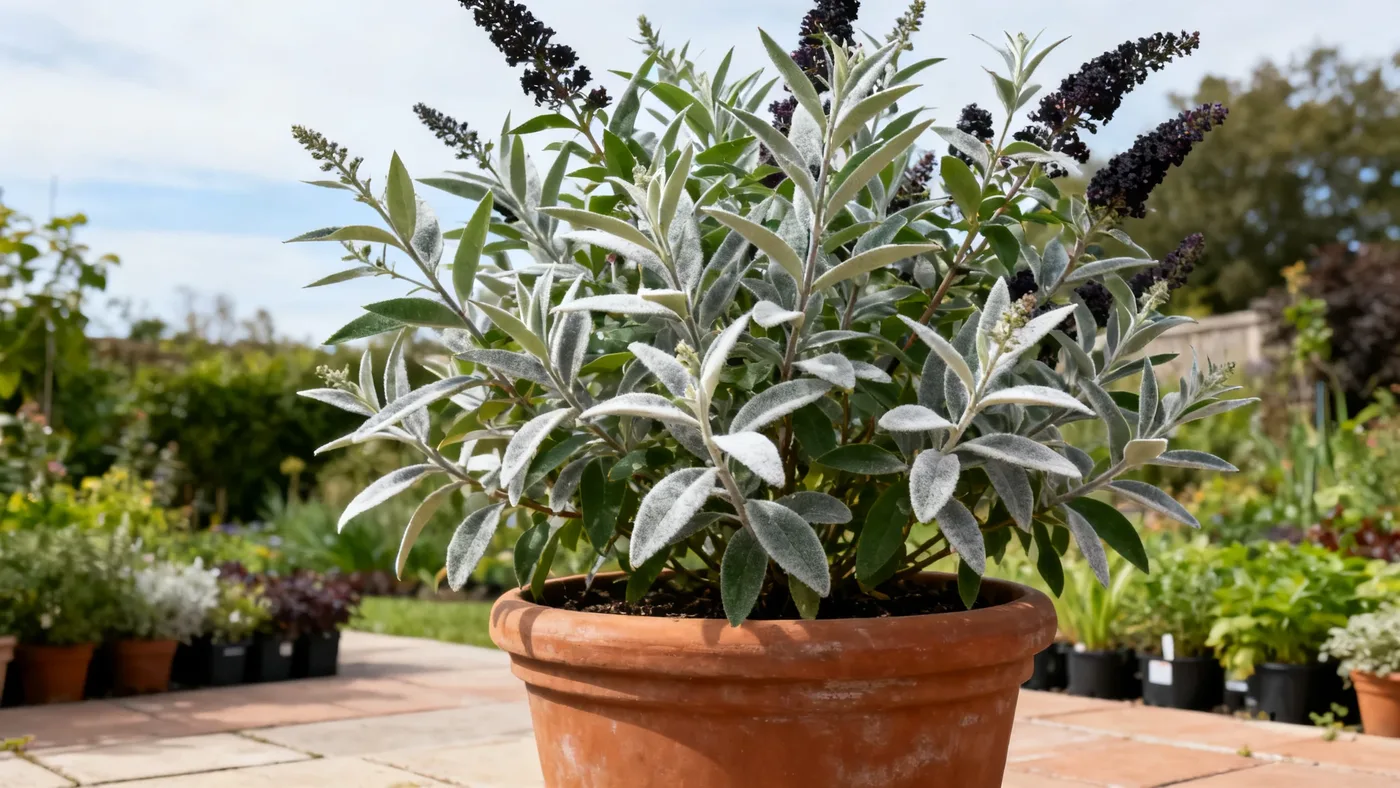
Growing Black Knight Butterfly Bush in a Container or Pot
Black Knight Butterfly Bush can thrive in a pot for a season or two, bringing deep purple blooms and butterfly visitors to a patio, deck, or balcony. While these shrubs ultimately perform better planted in the ground, a well-tended container plant can deliver steady flowers from mid-summer through early fall. If you don't have garden space or want to experiment with this stunning cultivar on a deck, here's how to set up a container for success.
What You'll Need
- A container with drainage holes: 5-gallon minimum, or larger (a 10-gallon pot is better for longevity); aim for 12 to 15 inches deep and wide
- Well-draining potting soil mix; add perlite or coarse sand to prevent waterlogging
- A Black Knight Butterfly Bush plant from a quart-size or #1 container
- Balanced liquid fertilizer, 10-10-10 or 5-5-5 ratio
- Pruning shears for deadheading and spring pruning
- Watering can or hose with a gentle spray nozzle
- A saucer or tray to catch drainage (optional)
- Plant label to identify the cultivar
Step-by-Step Planting Instructions
Step 1: Select and Prepare Your Container
Start with a pot that has at least one drainage hole in the base. A 5-gallon container is the bare minimum, but a 10-gallon pot (roughly 12 to 15 inches across and deep) gives roots more room and moderates soil temperature swings better. Terra-cotta breathes and keeps roots cooler, while plastic retains moisture longer. Both work depending on your climate and watering habits. If you live in zone 5 or 6, where Black Knight Butterfly Bush may die back to the ground in winter, a 5-gallon pot suffices since the plant likely won't survive outdoors long-term anyway. In zones 7 to 9, choose a 10-gallon pot if you plan to keep the plant through two seasons or more.
Step 2: Mix Drainage-First Soil
Black Knight Butterfly Bush dislikes constantly wet feet. Use a commercial potting mix as your base, then amend it: to every 5 gallons of mix, add 1 cup of perlite or coarse sand to improve drainage and prevent waterlogging, especially in humid climates. The soil should stay moist but never soggy. Target a soil pH between 6.0 and 7.5. Most bagged potting soils fall in this range already, so check the label or test with a simple pH meter if you're uncertain about your mix.
Step 3: Plant at the Correct Depth
Carefully slide your Black Knight Butterfly Bush from its nursery pot. Gently loosen the root ball with your fingers or a small hand tool, especially if roots are circling tightly. Set the plant in the container so the top of the root ball sits level with the pot's rim. The base of the stem should sit right at soil level, matching the depth it was growing at in the nursery pot. Backfill with your amended potting soil, firm it gently around the roots, and water thoroughly.
Step 4: Water Thoroughly After Planting
Pour water slowly until it drains from the base of the pot. Repeat once more to settle the soil and eliminate air pockets. During the first 3 to 4 weeks (establishment phase), keep the soil moist but not soggy. Stick your finger into the top 2 inches of soil; if it feels dry, water. Once you see new growth and the plant is actively growing, shift to a regular watering schedule (see the Ongoing Care section below).
Step 5: Position for Full Sun
Place the pot in full sun, receiving at least 6 to 8 hours of direct sunlight daily. Black Knight Butterfly Bush flowers form on new wood and blooms best in strong light. Partial afternoon shade is tolerable, but the plant will produce fewer and smaller flower panicles. If your patio's sun angle shifts seasonally, reposition the pot to track sunlight when possible.
Ongoing Container Care Through the Season
Watering
Once established (after 3 to 4 weeks), water deeply when the top 1 inch of soil feels dry to your touch. In hot weather, this may be every 2 to 3 days. In spring and fall, you'll stretch to once or twice a week. Containers dry faster than in-ground soil, especially in perlite-heavy mixes and terra-cotta pots. Lift the pot occasionally to gauge its weight; a light pot is drier than a heavy one. Consistent moisture is key. Never let the soil completely dry out for extended periods, and never leave the pot standing in a saucer of water, which invites root rot.
Fertilizing
Container plants exhaust nutrients faster than in-ground shrubs because watering leaches nutrients away. Apply a balanced fertilizer (10-10-10 or 5-5-5 analysis) once a month from late spring through mid-summer. Avoid excess nitrogen, which pushes leafy growth at the expense of flowers. Once flower buds form in mid-summer, you can reduce or stop feeding to let the plant concentrate energy on blooms. A light touch works better than heavy feeding in a confined root space.
Deadheading Spent Flowers
Remove spent flower panicles as soon as they fade. Pinch or cut off the tip of the stem just below the withered flowers. This signals the plant to produce more blooms rather than invest energy in seed production. Deadheading extends the flowering window through early fall and keeps the plant looking fresh. A potted plant sits close at hand, so this rewarding task is easier than managing larger landscape shrubs.
Pruning and Winter Dormancy
In late winter or early spring, before new growth breaks, cut the entire plant back to 12 to 18 inches from the soil surface. This hard pruning ensures vigorous new growth and abundant flowers, since this cultivar flowers only on new wood. In zones 5 and 6, expect the plant to die back to the ground or below during a harsh winter; cut any dead wood away in spring and allow it to regrow. In zones 7 to 9, the plant usually survives winter but becomes woody and sparse without pruning, so don't skip this step.
Many gardeners treat a potted Black Knight Butterfly Bush as a one- or two-season plant and start fresh each spring rather than overwintering it. If you want to try overwintering, move the container to an unheated garage or sheltered location in zones 5 and 6. In zones 7 to 9, you can leave it outdoors, but it will look rough after winter.
Tips and Common Mistakes to Avoid
- Container too small: A 5-gallon pot works for one season, but roots become dense by mid-summer. Upgrade to 10 gallons if you want the plant to perform well into a second year.
- Waterlogged soil: Soggy, poorly draining soil invites root rot. Always use a well-draining mix, never let the pot sit in standing water, and ensure drainage holes stay clear.
- Skipping deadheading: Spent flowers signal the plant to make seeds, not new blooms. Regular deadheading coaxes significantly more flowers from a confined root system.
- Inconsistent watering: Swinging between bone-dry and waterlogged stresses the plant. Aim for evenly moist soil without pooling.
- Neglecting spring pruning: Containers require annual hard pruning to prevent legginess and sparse lower growth. Cut back to 12 to 18 inches every late winter or early spring.
- Overfertilizing: Too much fertilizer, especially high-nitrogen types, produces leafy growth with few or no flowers. A light monthly feeding is plenty for a container plant.
- Insufficient sunlight: Aim for 6 to 8 hours of direct sun daily. Less light results in sparse blooming or none at all.
- Leaving soil amendments out: Perlite or coarse sand added to potting soil makes the difference between a thriving plant and one prone to root rot in a wet season.
What to Expect
A Black Knight Butterfly Bush planted in a quart-size or #1 container typically blooms the first year. From mid-June through September (or into October in warmer zones), the plant should produce successive spikes of deep purple flowers, nearly black in bud and opening to dark violet-purple with an orange eye. The blooms are fragrant with a sweet honey-like scent. Butterflies, bees, and hummingbirds will visit regularly.
Container-grown plants remain smaller and more compact than landscape specimens. Your potted Black Knight may reach 4 to 5 feet tall by the end of its second season, rather than the full 6 to 10 feet typical of in-ground plants. This proportional size makes container growing appealing for small patios and decks.
Growth is fast. You should see 1 to 2 feet of new growth per year, sometimes more in warm regions with consistent water and full sun. This vigorous growth means your plant may outgrow a 5-gallon pot by the second season, making an upgrade to a larger container necessary if you want to keep it long-term.
Overwintering a container plant outdoors in zones 5 and 6 carries risk. The pot's small soil volume offers far less insulation than ground soil, so roots are vulnerable to freezing on harsh nights. Many growers simply move pots indoors to a sheltered, unheated space or start fresh each spring with a new plant. In zones 7 to 9, outdoor overwintering is feasible, but expect the plant to look weathered; vigorous spring pruning will restore it.
Quick Reference Checklist
| Task | When | Key Details |
|---|---|---|
| Plant or repot | Spring after last frost | Use 5- to 10-gallon container with drainage holes; 10 gallons preferred for longevity |
| Establishment watering | First 3-4 weeks | Keep soil consistently moist but not waterlogged |
| Regular watering | Throughout growing season | Water when top 1 inch of soil is dry; every 2-3 days in hot weather |
| Fertilize | Once a month, late spring through mid-summer | Use balanced 10-10-10 or 5-5-5 fertilizer; avoid excess nitrogen |
| Deadhead faded flowers | Throughout bloom season, June-September | Promotes continuous rebloom and removes seed triggers |
| Spring pruning | Late winter or early spring, before growth breaks | Cut back to 12-18 inches from soil surface for full vigor |
| Winter strategy | Late fall | Zones 5-6: move indoors or replace plant; zones 7-9: prune hard in spring, can leave outdoors |
For more detailed care information, pruning techniques, and troubleshooting, see the complete Black Knight Butterfly Bush care guide.