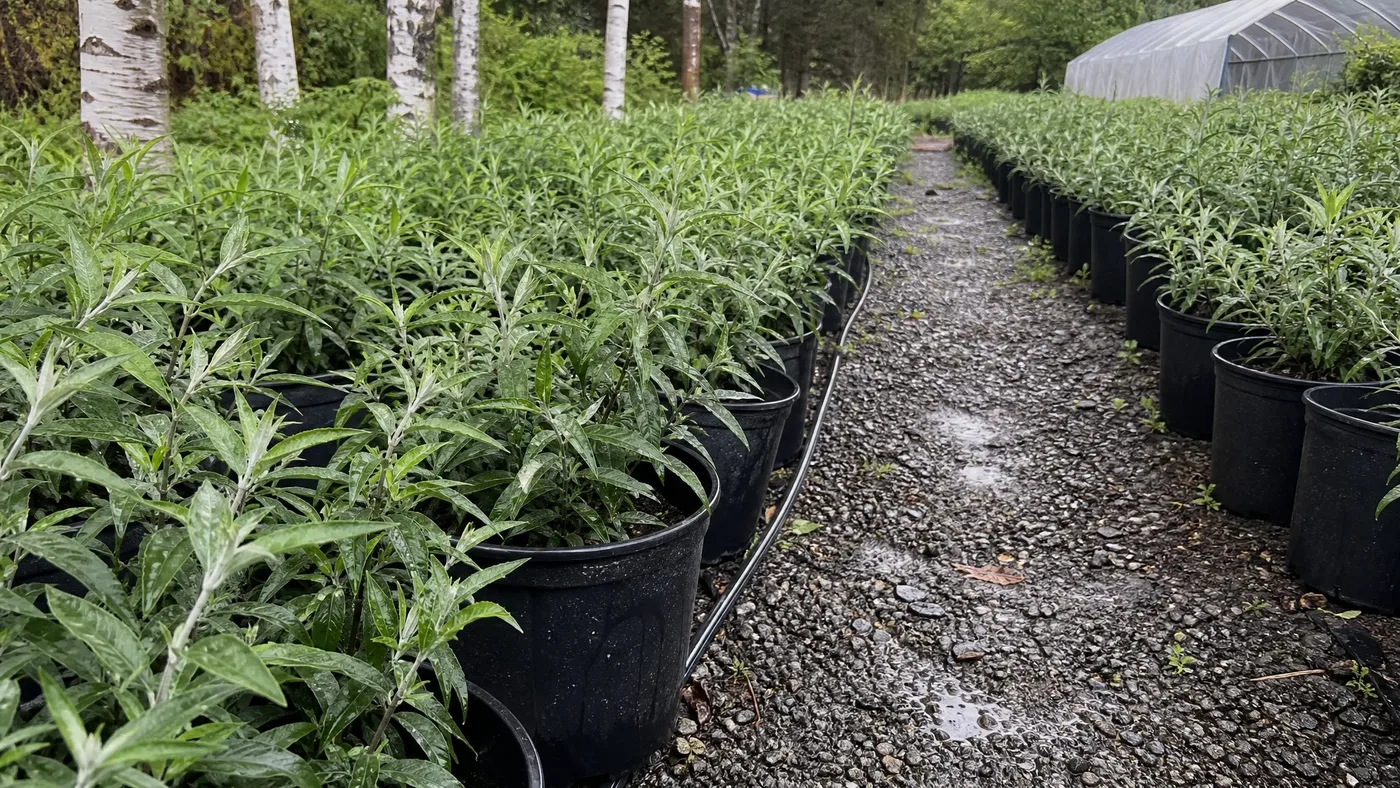
Can You Grow Black Knight Butterfly Bush From Seed?
A packet of butterfly bush seed costs a couple of dollars and a plant costs several times that. The difference is mostly patience and a bit of luck. If seedlings are popping up under an old Black Knight, or you want a cheap way to fill a long fence line, seed is a real option. It just isn't the one most people expect.
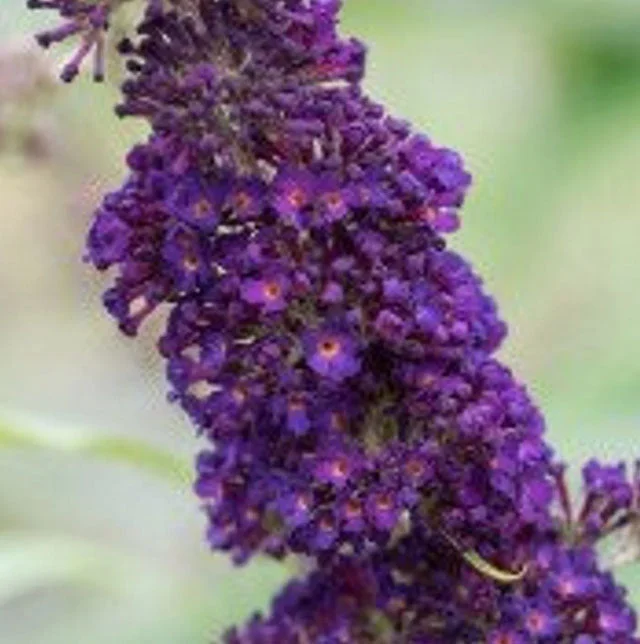
Black Knight sets seed by the thousand, so the seed itself is easy to come by. The trouble is that what grows from it is a gamble, and a slow one.
Below, you'll find out all about growing Black Knight Butterfly Bush from seed, including why the seedlings won't match the parent, how to sow and wait, what the first weeks and the first season look like, and whether the whole project beats buying a plant.
Before You Buy a Packet of Black Knight Butterfly Bush Seed
Seed is cheap, but the real price is time and uncertainty, so settle three questions before you spend anything.
Know What Packet You Are Holding
Black Knight is a named cultivar, which means every plant sold under that name is a clone of the original. It is not a seed strain. A packet labeled "Black Knight" promises something nobody can deliver, and packets sold as plain Buddleja davidii are at least honest about what they are.
If you already own a Black Knight, you have a free seed source. A single panicle can carry as many as 40,000 seeds, so you will not run short. Seed that doesn't germinate right away stays viable in the soil for three to five years, which is why volunteers keep appearing long after you thought you'd pulled the last one.
Count the Time Honestly
Seed means a season of tiny plants before you have anything that looks like a shrub. A potted plant or a rooted cutting skips most of that stretch. If you want a purple-flowered shrub next summer, read our buying guide and skip the seed tray.
If you enjoy raising things from nothing and can wait, carry on. Just go in knowing you are signing up for a hobby project, not a shortcut.
Check Local Rules
Butterfly bush that sets viable seed is regulated in some places. Washington State's noxious weed board lists the species as quarantined, with exemptions only for sterile cultivars that produce under 2% viable seed. Black Knight is not one of those sterile types.
Our invasiveness guide covers the larger picture, and your local extension service can tell you what applies where you live. Check before you sow, not after the seedlings are up.
Why Black Knight Butterfly Bush Seedlings Vary
This is the part that surprises people, so read it before you sow anything.
Black Knight has scented, deep purple flowers in long panicles. Growers hold that color by taking cuttings, never by sowing seed. Seed from a clone is a shuffle of genes from the parent and from whatever pollen arrived on the wind or on a butterfly's wings. A neighbor's pink or white butterfly bush may have fathered half your seed.
The species itself is lilac-colored with an orange throat, and seedlings tend to drift back toward that look or land somewhere in between. You may get a lovely purple. You may get a washed-out lilac with an orange eye that looks nothing like the dark panicles you were after.
Vigor varies too. Some seedlings will sprint and others will sulk, and you can't tell which is which by looking at the tray. Size is also loose. The cultivar has an ultimate height and spread of 8 to 13 feet, while the species runs 6 to 12 feet high and as much as 15 feet wide, so a seedling could settle anywhere in that range.
What we tell customers is to treat seedlings as new plants that happen to share a parent. Don't call them Black Knight, and don't promise a friend a Black Knight from your seed. The lance-shaped leaves and the scent may be familiar. The color is the part you can't count on.
Sowing Day and the Chilly Wait
Sowing is simple, since the seed is fine as dust and wants almost nothing from you. The waiting is where most people lose interest.
Sow on the Surface
Fill a clean tray or small pots with fresh seed-starting mix and wet it thoroughly before the seed goes on. Scatter the seed thinly across the top and press it in lightly with a flat board or your palm. Do not bury it, because seed this small will not push through a blanket of soil.
Label the tray with the parent plant and the date. In six months you will not remember which tray was which, and the label is the only record of where the seed came from.
Give It the Cold Spell
Many seed packets call for a cold, damp rest before germination, and it is a sensible step to include here. We won't put a day count on it, because we don't have a source for one. Follow the packet if you bought seed, or ask your local extension service if you collected your own.
The usual method is to set the tray somewhere cold but not frozen solid, such as a sheltered spot outdoors in winter or a refrigerator, and keep the mix from drying out. Cover the tray loosely so moisture stays in without sealing it tight.
Bring It Into the Light
When the cold period ends, move the tray into warmth and bright light. Germination should follow. The Washington State Noxious Weed Control Board reports germination rates above 80% for several cultivars, so good seed does come up, and plenty of it.
Run through this checklist before you walk away from the tray.
- Use fresh, sterile seed-starting mix, wetted before sowing.
- Leave the seed on the surface, lightly pressed in.
- Label the tray with the parent plant and the sowing date.
- Keep the mix damp through the cold spell, never soggy and never dry.
- Move the tray to bright light when the cold period ends.
The First Weeks When Nothing Seems to Happen
After sowing there is a long, quiet stretch that tests your nerve, and most of what you see in it is normal.
What Normal Looks Like
Expect a tray of bare mix for longer than feels reasonable. Then you will see green specks so small you wonder if it's moss. They are the seed leaves, and they sit there looking unimpressive for a good while before anything else shows.
One of the most common questions we get is whether a quiet tray is dead. Usually it isn't. Keep the surface evenly damp, keep the light bright, and leave it alone. Poking at the mix every morning does more harm than waiting.
When to Worry
Fuzzy mold on the surface, or seedlings that collapse at the soil line, point to too much water and too little airflow. Water from below, give the tray fresh air and spread the seedlings out if they are crowded. A small fan across the room, not pointed at the tray, helps a lot.
If nothing appears after a good stretch of warmth and light, the seed may have been old, or sown too deep. Don't tip the tray out too soon. Because the seed of this plant can wait years in soil, a few late risers are possible, so give the tray a few more weeks before you give up.
Thinning Seedlings of Black Knight Butterfly Bush
Once true leaves appear, the tray becomes a crowd, and your job shifts from waiting to editing.
Wait for True Leaves
The first pair of leaves are seed leaves and look nothing like the adult plant. The true leaves that follow are the ones to watch. Black Knight's leaves are lance-shaped and whitish beneath, and that look starts to show at this stage.
Move nothing until true leaves have formed. Seedlings this small handle transplanting badly, and a few more days in the tray costs you nothing.
Thin and Pot Up
Water the tray first so the mix lets go of the roots. Lift each seedling by a leaf, never the stem, and ease it out with a pencil or a plant label. Plant each one alone in its own small pot of ordinary potting mix, burying it to the same depth it was growing at.
Discard the thin, pale and crooked ones. Seedlings vary, so this is your first round of selection. Keep the sturdiest and the ones with the darkest stems and leaf color, since that is the only early hint you get about the flowers.
Don't feel guilty about culling. A tray of a hundred seedlings is not a hundred shrubs. It's a handful of good ones and a lot of compost.
Small Plants and Modest Hopes for Black Knight Butterfly Bush
The first growing season belongs to roots and leaves. If flowers show up, treat them as a bonus.
Harden Off Before Planting Out
Indoor seedlings are soft. Move them outdoors for a little while each day, starting in shade and building toward full sun over a week or two. Wind and midday sun scorch leaves that have never seen either.
Full sun is what the plant wants for good, and our planting guide covers spacing and site once the seedlings are ready. Plan for the adult, not the seedling, because a mature plant can reach 8 to 13 feet across.
Watch Pots Through Dry Spells
Seedlings in small pots dry out fast, and spider mites can become a problem during drought. Check the pots daily in hot weather. The drought tolerance people talk about belongs to established plants, not to a seedling with a thumb-sized root ball.
Bloom in the First Season
Butterfly bush can produce seed in its first year, which means it can bloom in its first year. A seedling started early might send up a modest spike, but don't count on it. Whatever color it shows is your first real clue about what you have.
Our bloom time and color guide helps you compare what you get with the true Black Knight.
Protect the Youngest Plants in Winter
The species is hardy in USDA zones 5 through 9. A seedling has had less time to build roots than an established plant, so protect the youngest ones where winters are hard.
A Seed-Grown Black Knight Butterfly Bush in Year Two
By the second summer a surviving seedling starts to behave like the shrub you were hoping for.
Butterfly bush blooms on current year's growth, with flower panicles at the tips of new shoots. That makes a seedling's second year its first real show. Expect flowers somewhere in the species' June to September window, with a honey-like scent and the butterflies that follow it.
Our pruning guide explains the spring cut-back, and the University of Arkansas extension says you can be quite aggressive with spring renewal pruning. A seedling that sulked in year one often rewards a hard cut.
Next to a nursery-bought or cutting-grown Black Knight, the seed-grown plant is the unknown. A bought plant gives you the deep purple, the vigorous arching habit and a known bloom schedule. The seedling gives you whatever it gives you. It may be slower or leggier, and it may be a completely different color.
Cut spent flower spikes before they ripen, since a plant that sets seed this freely will sow its own seedlings all over the yard.
Is the Wait Worth It for Black Knight Butterfly Bush?
Seed is worth it for some people and a poor deal for most, so here is where we land.
If you want the real Black Knight, seed is the wrong tool. Cuttings from a plant you already have give you true copies, with the same deep purple, and a bought plant gives you the same with no waiting. Both are faster and more predictable than a tray of seedlings.
Seed makes sense if you like the process, if you have a spare corner for experiments, or if you want many cheap plants for a hedge or a wild edge and don't mind the color lottery. It also makes sense if volunteer seedlings are already coming up and you'd rather pot them up than pull them.
In our rows, the seedlings we pot up are always more variable than the cuttings next to them. That variety is the entire appeal for some people, and the entire problem for everyone else.
Our Verdict on Black Knight Butterfly Bush Seed
Grow Black Knight from seed if you enjoy the process and can wait. Otherwise buy a plant. You get the color you wanted, a known size, and a shrub in bloom a good while before a seedling gets there. The garden-center route isn't cheating, and it's what most people end up doing anyway.
Black Knight Butterfly Bush
Nursery-grown Black Knight Butterfly Bush in sizes from Quart Plant, shipped to your door.
From $49.49
Shop Now →Before a plant leaves us, our growers check the roots, stems and foliage of every one. We're a small business that grows its own Black Knight, so we'd rather you start with a plant whose color we know.